
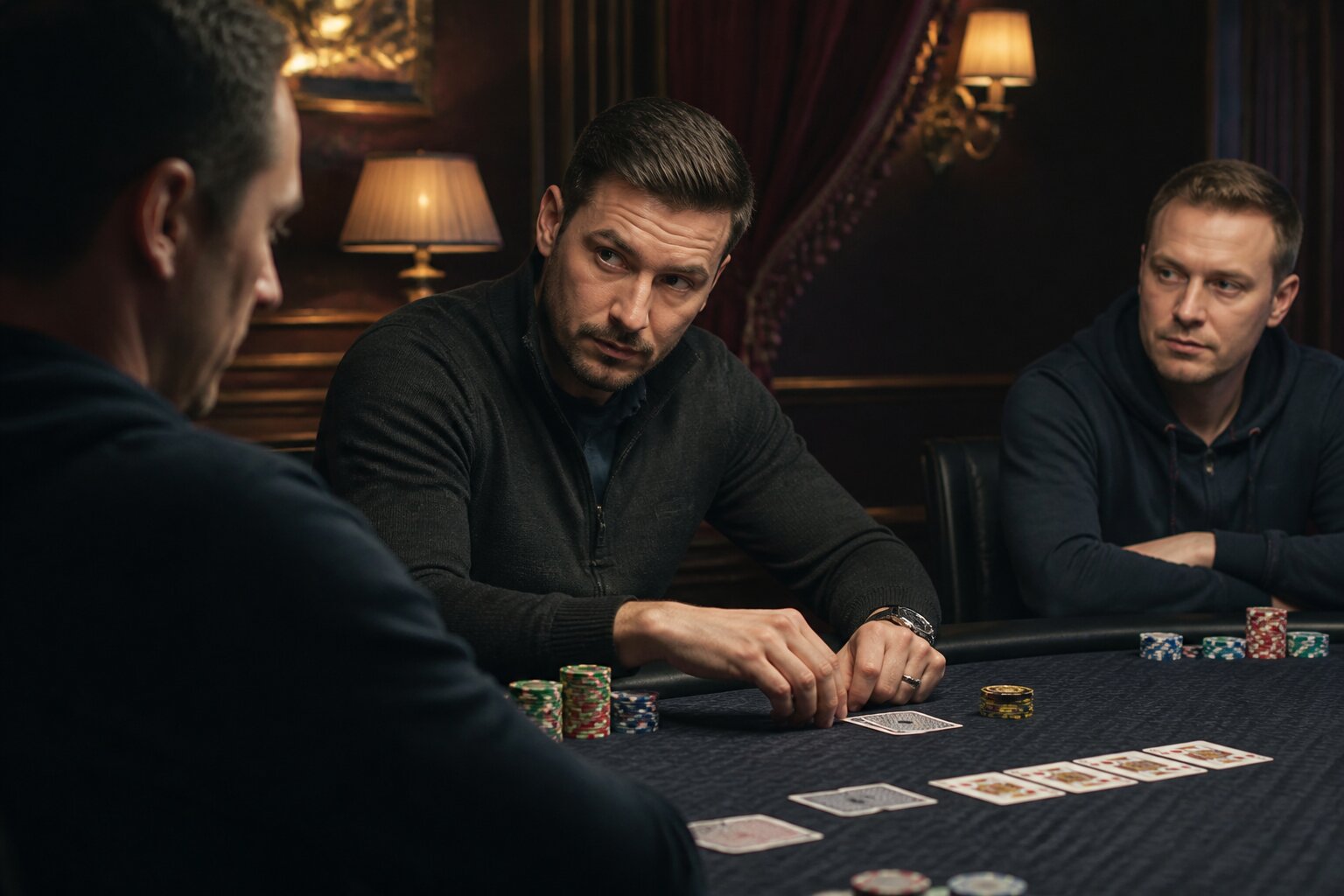
Poker has its fair share of unwritten rules and clever tactics, but there’s a fine line between playing smart and crossing into grey areas. Ever noticed someone at the table bending the rules without breaking them? You might have witnessed an angle shoot.
These questionable moves can confuse even experienced players and leave you questioning what’s fair. Knowing how angle shooting works helps you spot sneaky behaviour and keeps the game straightforward for everyone.
Curious about what counts as an angle shoot, how to recognise it, or what good poker etiquette looks like? Read on to learn how to identify these moves, protect yourself at the table, and keep play civil and fair.
What Does Angle Shooting Mean in Poker?
Angle shooting refers to actions that take unfair advantage of other players while technically staying inside the rulebook. It’s about exploiting loopholes, ambiguous situations or the slow response of others to gain an edge that isn’t in the spirit of the game.
These behaviours might not trigger an explicit rule breach, but they erode the trust and mutual respect poker relies on. Rather than relying on skillful play or clearly permitted tactics, angle shooting uses misleading gestures, ambiguous words or timing tricks to unsettle opponents and elicit favourable reactions.
Recognising the distinction between legitimate strategy and this sort of manipulative behaviour is important for maintaining a level playing field and a pleasant atmosphere at the table.
Common Examples of Angle Shooting at the Table
Angle shooting turns up in many forms. The examples below are ones you’re likely to see in cash games or tournaments and explain why each crosses the line.
1. Acting Out of Turn
When a player deliberately acts before it is their turn, they may try to learn how others will respond or change the dynamics of betting. Even if the action is later revoked, it can influence decisions and create an unfair advantage.
This behaviour often takes subtle forms, such as making a small bet, reaching for chips, or pushing cards forward. Any action that interferes with the normal sequence of play can pressure other players into making mistakes or reveal information they would otherwise withhold.
2. Hiding Chips or Bet Amounts
Obscuring the true size of a stack or bet, by placing chips behind others or making ambiguous chip movements, prevents opponents from assessing pot odds and alters the fairness of the hand. This lack of transparency can mislead other players about the strength of a bet or the remaining chips in play.
The intent is to create uncertainty so opponents cannot make informed decisions. Dealers and floor staff should be called if a bet is unclear, and players should make a clear, recognisable action when betting or raising.
3. False Declarations or Gestures
Pretending to fold, saying “call”, or making another declaration to provoke reactions is deceptive. These antics create confusion about the action and can cause costly mistakes for less attentive players.
Such gestures exploit the table’s reliance on verbal and physical cues. If a player makes an unclear statement, other players can request clarification and, where appropriate, involve the dealer to resolve the situation.
4. Misleading Speech or Table Talk
Using ambiguous phrases or intentionally confusing chatter to induce a misread of intentions is another form of angle shooting. While players are allowed to speak at the table, deliberate misdirection that changes decisions goes beyond acceptable behaviour.
Examples include giving false information about one’s own cards, suggesting incorrect rules, or feigning agreement to a proposed action. Responsible table talk is clear and honest; anything designed to manipulate choices should be challenged by the dealer or floor.
Spotting these behaviours helps you respond calmly and keep the game moving without allowing unfair tactics to take hold. If you suspect angle shooting, raise the issue with the dealer or floor supervisor rather than confronting the player directly, so the matter can be handled fairly and in line with house rules.
Why Is Angle Shooting Considered Poor Etiquette?
Angle shooting contradicts the unwritten code of conduct that keeps poker orderly and enjoyable. The game depends on clear communication about actions, predictable timing and a mutual expectation that players will not manipulate others through deception.
When someone angle shoots, it undermines confidence in the table’s integrity. Players who are misled may make objectively worse decisions, and the overall atmosphere can become tense or hostile. In short, angle shooting replaces skill-based competition with opportunistic manoeuvres that disrespect opponents.
Most venues and serious players value etiquette because it preserves the competitive and social aspects of poker. Keeping to those norms protects everyone’s experience and the reputation of the game.
How Can You Recognise an Angle Shooter?
Recognising an angle shooter often comes down to pattern and intent rather than an isolated slip. Look for repeated behaviours that create ambiguity: frequent unclear gestures, repeated early actions, consistent chip-shelving that hides amounts, or a tendency to use phrasing that confuses meaning at critical moments.
Accidental mistakes happen, so consider context. A single unclear gesture is not necessarily malicious, but a string of such actions that coincides with personal gain is a warning sign. Observing how a player responds when corrected—whether they clarify and stop, or persist—also helps determine intent.
When unsure, maintain a careful focus on the action, verify bets and declarations when necessary, and notify the dealer if the behaviour becomes disruptive. That way you protect your own decisions without escalating matters at the table.
What Should You Do If You Witness Angle Shooting?
If you see someone angle shooting, the recommended approach is to stay composed and let staff handle it. Direct confrontation can escalate tension and distract from the game; dealers and floor staff are trained to adjudicate ambiguous situations and enforce house procedures.
Pointing out the issue discreetly to the dealer or a member of staff gives them the opportunity to address it impartially. They can remind the player of the rules, warn them, or apply penalties where appropriate. Keeping the exchange factual and calm makes resolution more likely and preserves the table’s atmosphere.
If you’re playing with friends in an informal setting, raising the point politely and asking for a clear decision on the action prevents ongoing confusion while avoiding personal conflict.
Is Angle Shooting Against the Rules?
Angle shooting sits in a grey area. Many forms do not amount to a clear rule breach, yet they still violate the spirit of fair play. That ambiguity is why venues may intervene even when a strict rule has not been broken, applying penalties or warnings to maintain order and protect other players.
Enforcement depends on the setting. Casinos, clubs and online platforms set expectations that players will act respectfully and transparently. Responses can range from a verbal warning to more serious actions such as:
- issuing formal penalties or fines;
- removing a player from the game or venue;
- suspending or banning an account in online play.
Repeated or blatant angle shooting usually draws attention and consequences because it distorts the fairness of the game and damages the trust at the table. Staff aim to keep the playing field even, and will act if behaviour crosses the line from clever play into unfair manipulation.
Debunking Myths: Is Angle Shooting Ever Acceptable?
Some claim angle shooting is just part of the game. In practice, reputable venues and most serious players do not accept it. Treating such behaviour as legitimate undermines both the competitive and social aspects of poker and can harm a player’s reputation among peers and staff.
Playing within the rules and the accepted etiquette preserves the quality of play for everyone. Staying transparent and respectful reduces disputes, avoids sanctions and helps maintain a safe, enjoyable environment for all participants.
Promoting Fair Play in Poker Games
Fair play depends on a mix of clear rules, attentive staff and players who expect honest behaviour from one another. Venues can support this by enforcing procedures, educating dealers and making it simple for players to report concerns. Players contribute by being transparent about their actions, calling attention to ambiguities calmly, and modelling good table manners.
There are also personal controls that help maintain a healthy relationship with the game, such as setting limits on time or money spent and using available account tools where relevant. If you ever need assistance with these options, staff can explain what’s available and how they function.
Encouraging fair play and following established etiquette keeps poker competitive, respectful and enjoyable for everyone involved. Play thoughtfully, be attentive, and help keep standards high at the table.
**The information provided in this blog is intended for educational purposes and should not be construed as betting advice or a guarantee of success. Always gamble responsibly.