
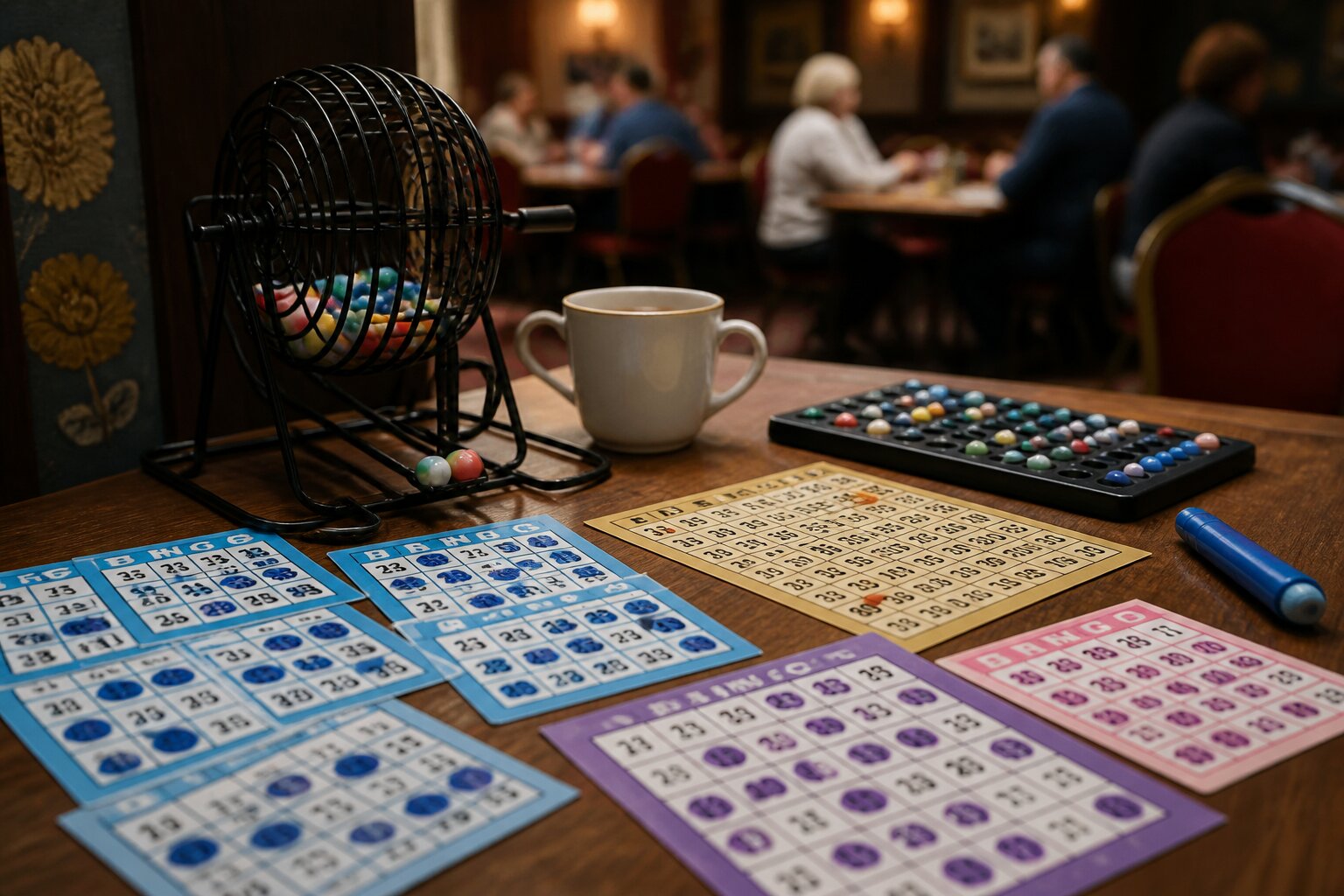
Bingo isn’t a single game—it’s a family of variations, each with its own rhythm and ways to win. From the steady pace of 90-ball to the blink-and-you-miss-it rounds of 30-ball, there’s a format to match different tastes and sessions.
Whether you’re new to the game or curious about a fresh style, understanding how these formats differ helps you pick the right option and enjoy the experience more.
Curious how these versions compare and which might suit you best? Let’s explore the popular bingo games you’ll encounter, with clear examples to show how each one plays out.
How Does Bingo Work Across Different Variations?
At its heart, bingo is straightforward: players have tickets with numbers and mark off numbers as they’re drawn, aiming to complete a defined pattern to win. The core mechanics remain consistent, while ticket layouts, number pools and winning patterns change between variations.
In 90-ball bingo, tickets have three rows and nine columns with numbers from 1 to 90. Players aim for one line, two lines or a full house. The 75-ball version uses a 5x5 grid labelled B‑I‑N‑G‑O and often includes a free centre square; games win by completing the pre-declared pattern. The hybrid 80-ball format uses a 4x4 grid and offers a mixture of line, corner and shape wins, while 30-ball speed bingo uses a compact 3x3 card where a full house is usually the sole prize.
Numbers are drawn either from physical balls or by electronic random number generators, and licensed operators follow standards that ensure fairness and transparent rules. With that basic map of how the formats differ, we can now look in detail at the most widely played styles, beginning with 75-ball bingo.
75-Ball Bingo: Rules & Gameplay
75-ball bingo is commonly found on platforms influenced by American-style play. Its 5x5 card and the variety of set patterns give each round a strong visual identity and a wide range of winning possibilities. Rounds tend to move at a steady pace, with callers announcing numbers until someone completes the required pattern and calls bingo, whereupon cards are checked and a winner is confirmed.
Card Design & Number Layout
A 75-ball card is arranged as a 5x5 grid with the columns labelled B, I, N, G and O. Numbers are grouped by column ranges: B holds 1–15, I has 16–30, N uses 31–45 (with the centre square usually marked FREE), G contains 46–60 and O covers 61–75. Players mark off numbers as they are called, using the free centre to help form patterns. Cards can be marked by hand, with daubers in live halls, or automatically in electronic play, but in every format the same basic layout and number distribution apply.
Common Patterns & Winning Conditions
Games announce the winning pattern before play begins. This can be a simple straight line across five squares, or more intricate shapes such as a cross, an X, a T or a diamond. Four corners and diagonal lines are frequent choices too. Because the target pattern varies, each 75-ball session feels different: one game might reward a quick horizontal line, while another requires a specific shape that calls for more selective marking. That variety keeps the format engaging and encourages players to pay attention to the pattern for each round.
Prizes, ticket costs and any house rules are usually published in advance, and operators will check winning cards against the called numbers before awarding a prize. Multiple winners can share a prize if more than one player completes the pattern on the same call. As with any game, outcomes are based on random number calls and terms and conditions apply.
What Makes 90-Ball Bingo Distinctive?
90-ball bingo is the traditional form most associated with UK play. Its ticket design—three rows by nine columns—creates a distinctive cadence: each card contains 15 numbers placed across 27 positions, with blanks filling the remaining squares.
The defining feature is the three-tier prize structure. The first prize is awarded for completing any single horizontal row, the second for two completed rows, and the final and largest prize goes to the full house, where all 15 numbers on a ticket are marked. This stepwise awarding keeps interest high throughout the game because prizes remain available from early on right up to the final calls.
The layout and staged prizes also make 90-ball social and easy to follow in a communal setting, with multiple opportunities to win in a single game. Next, we’ll expand the view to other variations that mix pace and pattern in different ways.
Other Popular Variations Explained
Beyond the well-known 75- and 90-ball formats, several other types introduce fresh pace and pattern choices. Two that often appear in clubs and online rooms are 80-ball bingo, which blends features from the classic formats, and 30-ball speed bingo, designed for very short rounds.
80-Ball Bingo: The Hybrid Choice
80-ball bingo uses a 4x4 grid with numbers taken from a pool of 1 to 80. Tickets sometimes use visual cues such as colour-coding to make the card easier to read. The winning patterns include horizontal rows and vertical columns of four, the four corners, full house (all 16 numbers) and occasional special shapes like squares or diagonals. Because the card is compact but still offers several pattern types, 80-ball provides a middle ground: games are faster than 90-ball but allow more variety than the single-goal speed formats.
This balance leads naturally to the fastest end of the spectrum, where rounds are completed almost as soon as they start.
30-Ball Speed Bingo: Quick-Fire Fun
30-ball bingo uses a 3x3 card and numbers from 1 to 30. With only nine numbers per ticket and a smaller draw pool, games are often over in a minute or two. The full house is typically the main prize target, so wins come quickly and sessions move at a brisk clip. This format suits players who prefer short bursts of play rather than longer, more social sessions.
What Prizes & Jackpots Can You Win?
Prize structures vary by format and by the game organiser. Many sessions offer cash prizes; some venues or events may add vouchers or merchandise, but cash remains the typical reward.
In 90-ball games, prizes are usually split across the three stages—one line, two lines and full house—with the largest share reserved for the full house. For example, a small £1 entry game might allocate its prize pool so the single-line winner receives a modest amount, the two-line prize is larger, and the bulk goes to the full house. 75-ball and 80-ball games often centre their main reward on the declared pattern, though organisers sometimes add smaller side payouts for lines or corners.
Progressive jackpots increase over time until they are won and typically require fulfilling a win within a set number of draws, such as completing a full house inside a specified number of called balls. These jackpots can grow substantially but are harder to claim. All prize rules should be displayed before a game starts so players know what they are playing for.
How to Choose the Right Bingo Game for You
Choosing a game is about matching its pace, ticket cost and prize structure to your preferences. If you want quick sessions, the 30-ball format provides rapid rounds and immediate results. If you prefer a traditional, social experience with multiple chances to win during a single game, 90-ball is well suited. The 75-ball and 80-ball formats sit between those extremes, offering varied patterns and a mix of speed and strategy.
Ticket prices affect the prize pool and often the number of participants; lower-cost tickets make it easier to play many rounds, while higher-cost games tend to offer bigger returns. Before joining a game, check the announced pattern, prize breakdown and ticket cost so the session fits your budget and expectations.
Licensed operators provide clear rules and prize information for each game, helping players make informed choices. Play within a set budget and treat sessions as entertainment rather than a way to gain money. With the right match between format and personal preference, bingo offers a range of enjoyable experiences—from a fast, lively round to a longer, communal game—and a clear way to pick what suits you best.
Enjoy Slots at Money Reels
We welcome you to explore the wide variety of entertainment available on our site. Whatever your preferences, you’ll find an appealing mix of choices to suit any mood.
It’s easy to get involved—simply set up your account, make a deposit and you’re ready to enjoy the fun at your own pace. We’re looking forward to having you with us.
**The information provided in this blog is intended for educational purposes and should not be construed as betting advice or a guarantee of success. Always gamble responsibly.