
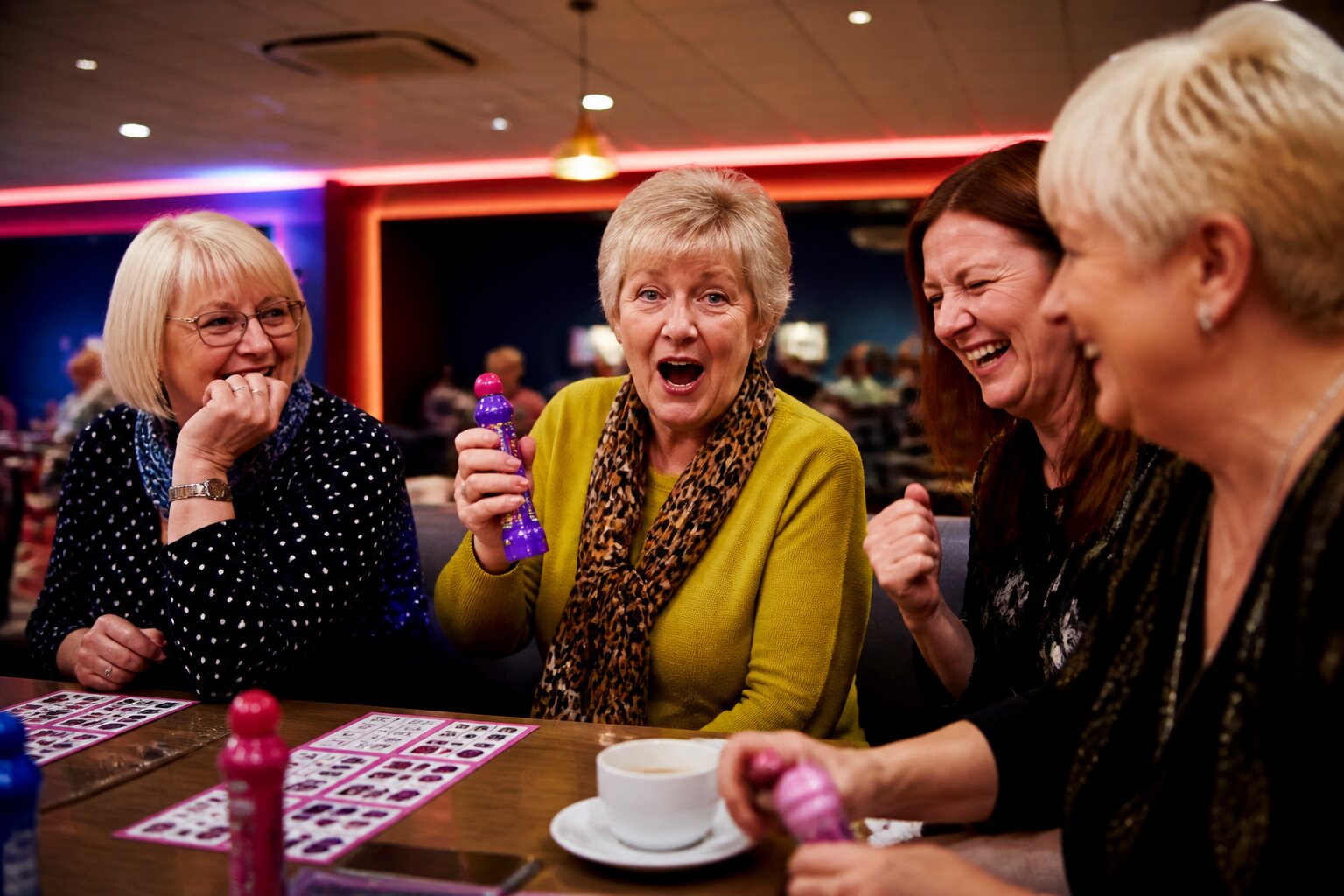
Ready for a giggle every time the bingo balls drop? Whether you’re a seasoned player or just curious about the cheeky language that crops up in halls and online rooms, you’re in for a treat.
From classic comedy banter to more daring slang, British bingo has its own vocabulary. Some calls might make you blush, others will have you smiling — and all of them tell a little story about bingo as a social pastime.
Don’t worry if you’ve never heard them before—this guide walks through the funniest and rudest modern calls used across the UK, explains where they came from, and shows how different regions put their own spin on the game.
What Are Bingo Calls In The UK?
Bingo calls are memorable phrases or nicknames used to announce each number as it’s drawn. They started as a practical aid: a distinctive phrase makes a number easier to recognise in a noisy room than that number alone.
Many calls rely on rhyme, visual image or wordplay. For example, “two little ducks” evokes the shape of the digits in 22, while “legs eleven” paints a quick mental picture for 11. That blend of clarity and entertainment turned calling into a performance as much as an announcement.
Beyond clarity, calls became part of the social fabric of bingo. They give callers personality, help players keep pace, and keep the atmosphere lively without straying into disrespect. The next sections show the terms you’ll hear today and the history behind how they came to be.
What Are Common Modern British Bingo Slang Terms?
Modern bingo slang mixes practical phrases with friendly chat. These terms are used in halls and online rooms, and knowing them helps you follow the game and join the conversation.
Full House – The main win, when every number on a card has been marked off. In many games this ends the round and triggers prize procedures.
One To Go – Used when a player needs a single number to complete their card. It’s often shouted or typed in chat, signalling a near-win.
Dabber – The marker used on paper tickets; online rooms use the same term for the digital marker. It’s a small but essential piece of kit.
Bingo Lingo – The collective name for the number nicknames and phrases callers use across a game.
Roomies – A friendly way to address other players in a chat room, helping the space feel social rather than anonymous.
Chat Host (CH) – The person who moderates the online room, answers questions and keeps the atmosphere upbeat and clear.
GG – Short for “good game,” a polite acknowledgement in chat after a round finishes.
These terms also reflect how bingo spaces have moved online: chat, moderation and shorthand allow people to play together even when they are in different places. Knowing the jargon helps you feel part of that shared experience and makes the game simpler to follow.
How Did Bingo Calls Originate In British Bingo?
Bingo calls emerged as a practical solution during the early 20th century, when the game spread through social clubs and community halls. In large, noisy rooms, it could be hard to distinguish numbers, so callers adopted short phrases to make each one stand out.
Many early calls drew on everyday references: occupations, rhymes, children’s games and topical jokes. Over time, certain phrases became standard because they were instantly recognisable and easy to repeat. Some callers added their own twists, creating local variations that stuck.
The practice also reflected the social role of the bingo hall. Callers were entertainers as much as announcers, and their phrases contributed to the communal mood. As bingo moved online and across generations, new terms have been added while many classics remain, preserving the mix of function and fun that defines British calling.
Are Rude Bingo Calls Acceptable In Modern Bingo Halls?
Cheeky calls have long been part of bingo’s humour, but standards have evolved. Today, mainstream venues and reputable online rooms aim for an environment that welcomes a wide range of adults and avoids content that could exclude or offend.
Mildly cheeky or suggestive references might still appear in informal settings or themed nights, but overtly rude or abusive language is typically avoided. Operators focus on maintaining respect and clarity so the game remains enjoyable for everyone.
If language ever feels out of place, hosts and moderators are there to respond. They guide the tone of the room and will adapt the calling style when necessary to keep the experience inclusive and compliant with regulatory expectations.
Here’s a brief example to illustrate the difference: a traditional cheeky rhyme that plays on double meanings may be permitted in a private social game, but a public or regulated room would substitute more neutral wording to avoid causing offence.
Regional Variations In British Bingo Calls
Bingo calls reflect local colour and the way communities speak, so regional differences are common. While many calls are recognised across the UK, accents, local jokes and cultural references can alter how a number is announced.
Northern England
In Yorkshire and Lancashire, callers sometimes use older sayings and a bit more banter. The local accent can give familiar calls a new rhythm, and callers will often personalise phrases to suit the room.
Scotland
Scottish halls may include slang or references that feel immediately familiar to local players. The cadence of the calls and the occasional regional word add a distinct flavour that regulars recognise.
Wales
Welsh games might slip a familiar Welsh word or cultural nod into a call, creating warmth and a sense of belonging among players who share that background.
These regional touches don’t change the game’s basics; they make the calling feel rooted in the community. Whether a call is delivered in a broad accent or with a local in-joke, the aim is the same: clear, entertaining announcements that bring people together. And with that shared goal in mind, bingo continues to adapt while keeping what makes it appealing — the chance to enjoy a familiar ritual, meet others and take part in something a little bit theatrical.
**The information provided in this blog is intended for educational purposes and should not be construed as betting advice or a guarantee of success. Always gamble responsibly.