
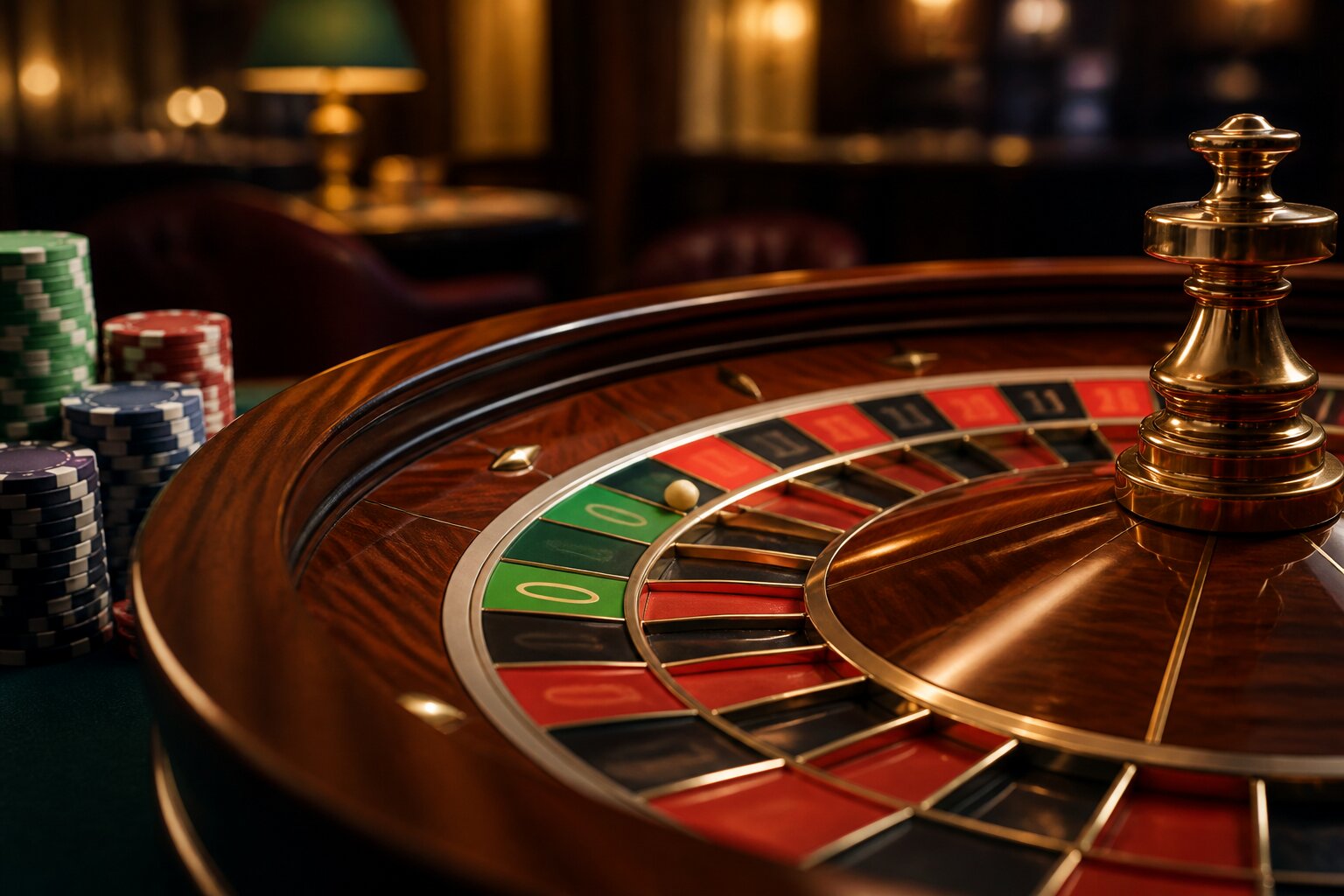
If you’ve ever watched a roulette table, those green pockets marked zero and double zero are hard to miss. They have a specific role in the game’s layout and are central to how odds and payouts are calculated.
You might wonder why some wheels have only one green pocket while others have two, and what difference that makes to your chances and returns. This article explains how these green slots work, what they mean for bets and payouts, and clears up common misunderstandings so you can follow the game with confidence.
Understanding Roulette Wheels: What Are Zero and Double Zero Slots?
A roulette wheel contains numbered pockets where the ball can land; among these, the zero and double zero are uniquely coloured green to show they are separate from the usual red and black numbers. On European wheels there is a single green pocket marked 0, while American wheels include both 0 and 00, creating two green pockets.
These green pockets are not part of the red/black or odd/even groupings. That difference matters because many common bets depend on those groupings—so when the ball falls on a green pocket those bets are treated differently. The placement and colouring are intentional to keep the layout intuitive: players and dealers can quickly identify which outcomes will affect even-money and other bet types.
The explanation of their visual and functional role leads naturally into why they are coloured green and what that highlighting achieves for play.
Why Are Zero and Double Zero Slots Green?
The green colour of the zero and double zero pockets is a visual signal, separating them from the red and black sequence and indicating that they behave outside the normal even-money classifications. This makes it clear at a glance which outcomes will not count as red/black or odd/even.
Historically, the distinct colour evolved to reduce confusion at the table and to make the special status of these pockets immediately obvious. On the betting layout, they also occupy dedicated positions so players can place bets directly on them or include them in combinations such as splits and basket bets. That clarity on both the wheel and the layout helps players assess risk and possible returns more easily.
With that visual and practical role explained, the next section shows how these pockets influence the maths behind the game and the house edge.
How Zero and Double Zero Affect Roulette Odds and House Edge
The presence of the green pockets is the key factor distinguishing European from American roulette in statistical terms. European wheels have 37 pockets (numbers 1–36 plus a single zero), so a straight-up bet on a single number has a probability of 1/37. The table payout for that bet is 35 to 1, which is slightly lower than the true odds and is what creates the casino’s margin. For European roulette this house edge works out at about 2.7%, meaning that over a large number of spins the expected return to the player is reduced by that percentage.
American roulette adds a second green pocket, bringing the total to 38 pockets. A single-number bet therefore has a probability of 1/38, while the payout remains 35 to 1. That mismatch increases the house edge to roughly 5.26%, so statistically the casino retains a larger share of wagers over time compared with the European version.
Understanding these percentages clarifies why the extra green pocket matters for the long-term expectation of a bet. Next, the article compares the two wheel types more directly so you can see how those differences affect common bets and outcomes.
Comparing European and American Roulette Wheels
The practical distinction between the two wheel types is straightforward: one green pocket versus two. That difference changes the number of possible outcomes and therefore the odds on every bet.
Because European roulette has fewer possible outcomes, standard bets give marginally better chances of success compared with American roulette. Most table payouts are identical between the two versions—for example, a straight-up number still pays 35 to 1—but the probability of achieving that payout is lower on the American wheel because of the extra pocket. Even bets such as red/black or odd/even are affected: a spin landing on any green pocket causes those bets to lose.
These statistical facts help explain why many players favour one wheel over the other, and they set the stage for understanding how payouts involving the green pockets are calculated in practice.
What Payouts Can You Expect from Zero and Double Zero Slots?
Bets placed directly on a green pocket are treated like any straight-up number bet: a successful straight-up on zero (or on double zero where present) pays 35 to 1. Converting that to money, a £1 straight-up win returns £36 in total.
There are also combination bets that include the green pockets. A split covering zero and a neighbouring number pays 17 to 1. On American wheels, a basket bet that covers 0, 00, 1, 2 and 3 is available and pays 6 to 1 if any of those pockets win. These lower payouts reflect the broader coverage of those bets compared with a single-number stake.
Knowing how these payouts relate to the number of pockets and to the house edge helps when choosing which bets to make. The next section tackles some common misunderstandings about the green pockets so you can separate fact from fiction.
Common Myths About Green Slots in Roulette
Several persistent misconceptions surround the green pockets. Clearing these up removes confusion and helps players interpret table behaviour accurately.
- Zero and double zero appear more often than other numbers. Each pocket has the same chance on any given spin as any other pocket on the same wheel: on a European wheel each pocket has a 1/37 chance, and on an American wheel each has a 1/38 chance.
- The colour of a pocket affects its probability of being selected. The green colouring is purely a visual distinction; it does not change the physical or statistical behaviour of a pocket.
- Earlier results change the chance of a future spin landing on a green pocket. Spins are independent events, so previous outcomes do not alter the probability of any particular pocket on the next spin.
Accepting these points helps form realistic expectations about outcomes and payouts. With the myths dispelled, the article has covered how the green pockets look, why they exist, the way they shape odds and payouts, and the mistaken beliefs that can cloud a player’s view.
Roulette’s green pockets are simple in purpose but significant in effect: they define the small gap between true odds and table payouts that produces the house advantage, and they create the betting options that distinguish European and American play.
Explore Casino Games at Money Reels
At Money Reels, we take pride in offering a relaxed, welcoming space where you can enjoy the pleasures of playing casino games at your own pace. Kick back and discover the excitement of being part of our community.
**The information provided in this blog is intended for educational purposes and should not be construed as betting advice or a guarantee of success. Always gamble responsibly.