
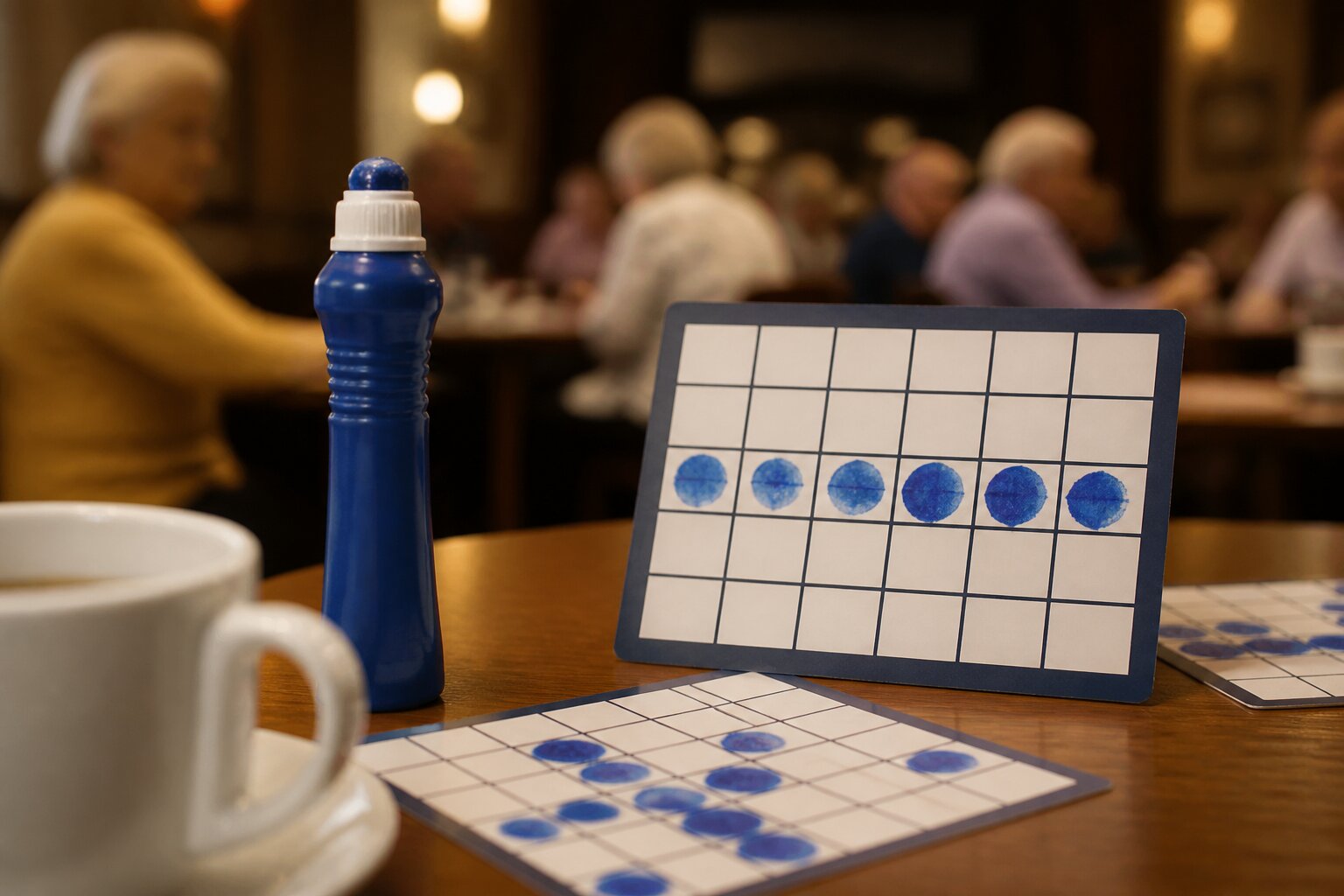
Bingo fans know there’s more to the game than just shouting "house" first. If you’ve ever wondered how winning lines work, particularly those horizontal ones, this article will clear it up and show whether a horizontal claim can land you a prize.
Before you dab your next number, it helps to understand what "horizontally in bingo" actually means and how it fits into different game formats. Read on to learn what counts as a horizontal win, how it varies between 90-ball and 75-ball games, and how those wins compare to other patterns.
Curious to find out whether horizontal wins are common and how they stack up against other patterns? The sections below explain this in practical terms and with clear examples.
What Does 'Horizontally' Mean in Bingo?
In bingo, 'horizontally' means across the card from left to right in a straight row. Completing a horizontal line means every number in a single row has been marked.
On a typical 90-ball ticket there are three rows and nine columns; a horizontal line is created by marking all five numbers in any single row. For instance, if the top row shows 2, 14, 27, 36 and 59 and those five numbers are all called, that row is a horizontal line.
A 75-ball card uses a five-by-five grid and usually includes a free space in the centre. A horizontal win requires marking every space in one row; if the free space sits in that row it counts toward the line. So, marking all five spaces in the third row of a 75-ball card, including a free, is a horizontal win.
Horizontal lines function the same conceptually across variants: the entire left-to-right row must be covered. Next we’ll look at how that plays out in the rules and prize structure of different bingo formats.
How Do Horizontal Wins Work in Different Bingo Variants?
Different bingo variants use distinct layouts and prize structures, so a horizontal win can have different significance depending on the game.
90-Ball Bingo: Horizontal Lines Explained
In 90-ball bingo each ticket has three rows of numbers. Games commonly award three types of prizes: one line, two lines and full house. The one-line prize typically goes to the first player to complete any single horizontal row, so completing one row early in the game often secures a prize while play continues for the next stages.
After the one-line prize has been claimed, play usually continues until someone claims two lines on the same ticket; once that’s awarded the final prize is for the full house, which requires every number on the ticket to be marked. To illustrate: if the top row’s five numbers are all called and marked, the player would claim the one-line prize at that moment.
This staged prize structure gives the horizontal line an important role early in 90-ball games, and it leads naturally into the chase for two lines and then the full house.
75-Ball Bingo: Horizontal Patterns and Prizes
A 75-ball ticket is arranged as a 5x5 grid, often with a central free space. Games can set a different pattern to win for each round; a straight horizontal line (any one row across) is a frequent choice. When the advertised pattern is a horizontal row, marking all five spaces in that row results in a win.
Prizes in 75-ball sessions depend on the host’s rules for that round — sometimes a single horizontal line is the only winning pattern, while other sessions might use more complex shapes. Because the free space can sit in the middle row, some horizontal wins will require marking only four called numbers plus the free space, which slightly alters the practical difficulty of that particular row.
Understanding these variations helps you recognise when a horizontal line is the goal and how it compares to other patterns coming up in later rounds.
Is Winning Horizontally Common in Bingo?
Horizontal wins are a regular feature of many bingo games, especially early on in sessions where a single line is the first prize. The frequency of a horizontal win depends mainly on how many tickets are in play and how many tickets each player holds.
For example, in a game where 100 tickets are sold and each ticket is unique, any given ticket has a 1 in 100 chance of being the first to complete the required horizontal line if everyone is playing a single card. If a player holds multiple tickets their combined chance of winning that prize increases proportionally. In 75-ball games where the pattern is a single horizontal row, the same principle applies: more tickets in play means a lower individual chance of being first.
Industry figures often show that the likelihood of any single ticket winning some prize in a large session is low, but it can change substantially with player numbers and ticket volumes. All random number processes are conducted using random number processes overseen by operators to ensure fairness and compliance with regulations; outcomes cannot be predicted or controlled in advance.
If you want to keep gameplay enjoyable and manageable, it’s sensible to plan how many tickets to play and to take pauses during long sessions. The next section looks at how horizontal lines compare to other common winning patterns so you can see which ones are more prominent in different games.
Horizontal Wins Vs Other Winning Patterns
Bingo offers several pattern types and each has its own role within a game’s structure. Horizontal lines are one straightforward goal, but vertical lines, diagonals and full-house wins also feature, and their relative frequency depends on the ticket layout and the stage of play.
In 90-ball bingo the typical prize progression is:
- Horizontal Line — all numbers across one row
- Two Lines — all numbers across any two rows on the same ticket
- Full House — every number on the ticket marked
This progression gives horizontal lines a clear place as the opening prize, with two lines and full house representing later stages that require more numbers to be called.
In 75-ball bingo the game organiser often varies patterns from round to round. Examples include:
- Horizontal Line — all numbers in any single row
- Vertical Line — all numbers in any single column
- Diagonal Line — all numbers from one corner to the opposite
- Full House/Blackout — every space on the ticket covered
Which pattern appears in any session is dictated by the rules for that round, so no single pattern is inherently more likely across all games. Whether a horizontal line or another pattern pays out first depends on the structure chosen for that session and on the random sequence of calls. Understanding those rules helps set expectations for how often each pattern might occur.
Each pattern brings a slightly different pace and tension to a session, and knowing what to expect from horizontal wins, two-line targets or full-house chases makes it easier to follow and enjoy the game.
Explore Casino Games at Money Reels
We’re always delighted to welcome new players to our site, where you can enjoy a friendly and inviting atmosphere. If you’re looking to explore a range of casino games, you’ll find plenty to choose from with us.
Getting started is simple—just create an account, make a deposit, and you’ll be ready to play. We look forward to seeing you at Money Reels!
**The information provided in this blog is intended for educational purposes and should not be construed as betting advice or a guarantee of success. Always gamble responsibly.