
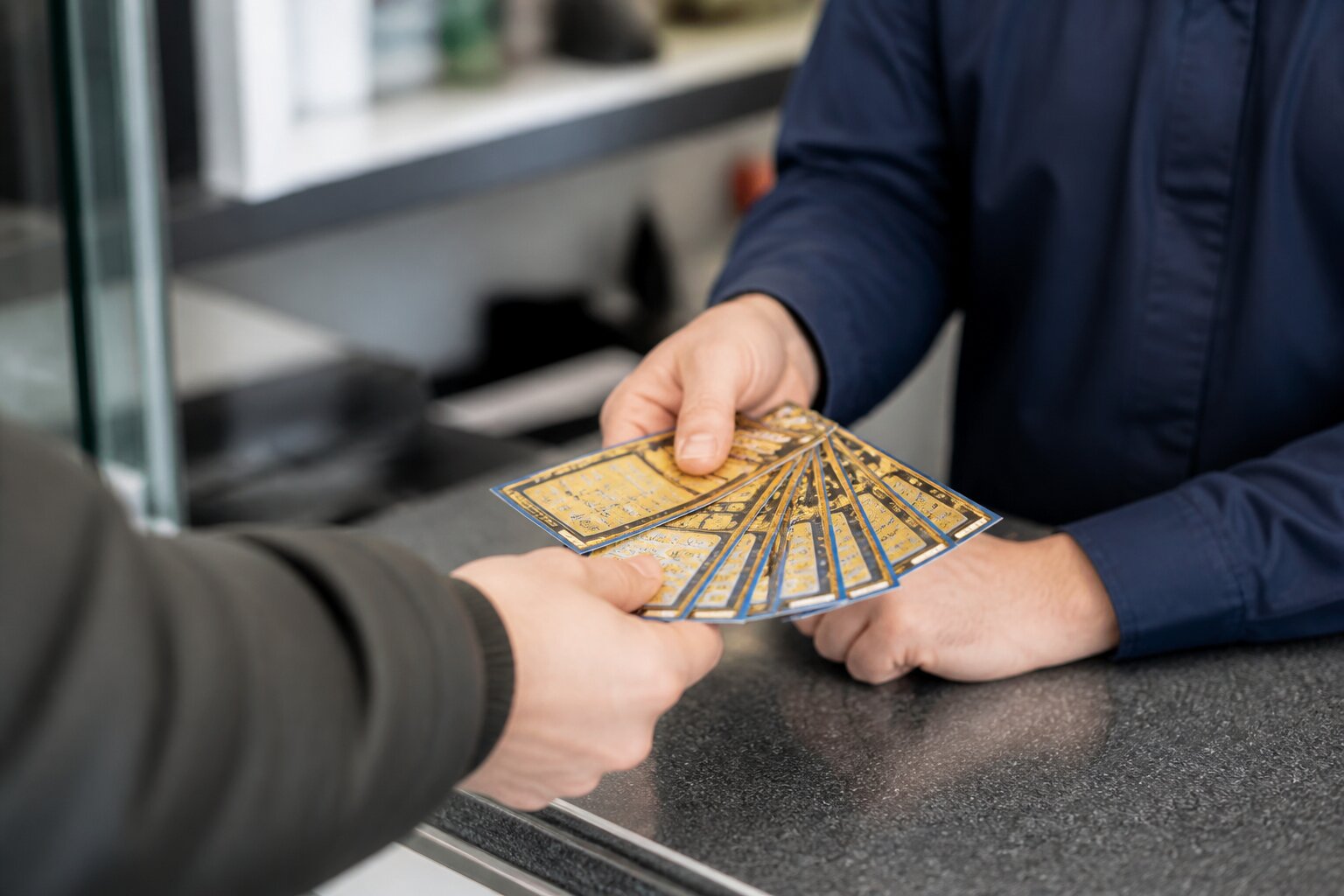
Ever found yourself at the newsagent’s counter, eyeing those colourful scratch cards and wondering, “Is there actually a limit to how many I can buy at once?”
Whether you’re a casual player or simply curious about the rules, knowing how purchases are handled helps you make sensible choices.
We’ll walk through what the regulations say, how retailers manage sales, and what to expect if you try to buy a large number at once.
What Are the Official Buying Limits for Scratch Cards in the UK?
There is no statutory limit on the number of scratch cards a person can purchase in one transaction in the UK. The National Lottery, which issues most scratch cards, does not impose a per-customer cap at the point of sale. In practice, that means a customer could buy multiple cards in a single visit.
That said, retailers have a duty to act where they see concerning behaviour. Staff training and guidance from regulators encourage intervention if a customer appears to be making excessive or impulsive purchases. Shop teams may refuse a sale if they believe it would cause harm, and every retailer has the legal authority to decline a transaction on those grounds. The minimum legal age to buy scratch cards remains 18, and staff will ask for valid ID if a customer looks under 25.
This mix of permissive purchase rules and retailer discretion is intended to balance availability with consumer protection. Read on to see how those local shop rules can affect what you actually experience at the counter.
Shop Policies: Can Retailers Set Their Own Limits?
Retailers are free to apply their own restrictions on scratch card sales. One newsagent might let you buy a large bundle, while another may limit purchases to smaller quantities. These policies are often shaped by a store’s approach to customer welfare, stock management or concerns about potential reselling.
Shops also train staff to recognise signs of problematic gambling and underage purchasing. If an employee suspects a person is buying cards on behalf of others, repeatedly purchasing large amounts, or showing behaviour consistent with problem gambling, they can refuse the sale or ask questions before proceeding. Those actions are part of a practical, on-the-ground application of broader safeguards and help keep daily operations fair for all customers.
Retail policies vary, so if you plan to buy a substantial number of cards it can be useful to check with staff first. The next section explains how age and identity checks might come into play during those purchases.
Are There Age or ID Checks When Purchasing Multiple Scratch Cards?
Retailers must ensure buyers are aged 18 or over. Staff typically request ID from anyone who appears under 25, and acceptable documents include a passport, driving licence, or a PASS-accredited proof of age card. When a customer attempts to buy multiple cards, staff may be more inclined to check ID, both to confirm age and to assess whether the purchase seems appropriate.
That extra scrutiny also helps staff spot unusual patterns, such as someone buying repeatedly in a short period or attempting to purchase on behalf of others. In those cases, staff may ask follow-up questions or refuse the sale if they have legitimate concerns. These checks protect both the customer and the retailer, and they form part of normal store practice rather than an indication of wrongdoing.
Knowing this, you can expect more attention on larger purchases, and retailers may refer customers to the lottery operator for further verification if needed. The following section outlines the legal position on buying in bulk and what happens if you win from a large purchase.
Is Bulk Buying Scratch Cards Legal in the UK?
Buying more than one scratch card at a time is legal provided the purchaser is over 18 and the transaction does not breach any retailer’s policy. There is no law forbidding bulk purchases, but sales must not be conducted for resale or otherwise used in ways that violate the rules set by the operator.
When it comes to claiming prizes from multiple cards, stores can pay out smaller wins directly. For higher-value claims there are procedures that may require contacting the lottery operator and providing identity verification. This ensures genuine winners receive their prizes securely.
Large or unusual purchases can also trigger anti-money laundering checks. Retailers and operators are required to report suspicious transactions and may ask for additional identification or information to confirm the legitimacy of a purchase. These safeguards help protect customers and the wider system. The next part looks at how online sales compare to in-person purchases.
Do Online Platforms Have Different Rules?
Online platforms often operate with tighter built-in controls than bricks-and-mortar shops. Many sites limit the number of digital instant-win games or scratch cards that can be purchased in a single transaction, and automated systems enforce those limits to help customers manage spending.
Account registration online typically includes age and identity verification, and further checks may occur before large purchases or prize claims. Operators use monitoring tools that can flag unusual behaviour and prompt account reviews. Online services also provide tools such as deposit limits, time-outs or self-exclusion to help people set boundaries with their play. These features offer a different kind of control compared with what you’ll encounter in a shop, and they can be especially helpful for people who prefer to manage activity via an account.
With that context, it’s worth considering why limits and checks exist in the first place, which the next section explains.
Why Do Purchase Limits Exist for Scratch Cards?
Purchase limits and checks serve several purposes. First, they help prevent impulsive or excessive spending by creating a point at which a sale is paused and assessed. This reduces the likelihood of someone making repeated, high-volume purchases in a short period.
Second, limits support efforts to protect vulnerable customers. They make it easier for staff or automated systems to identify behaviour that might indicate harm, such as frequent large transactions or purchases intended for resale. Third, limits and scrutiny are part of anti-fraud and anti-money laundering defences, helping to ensure the integrity of the market and that prizes reach legitimate winners.
Together, these measures aim to balance accessibility with safeguards, keeping play within reasonable bounds while allowing people to buy scratch cards as they choose. The final section describes what happens when the limits are reached.
What Happens If You Try to Buy More Than Allowed?
If a purchase exceeds a retailer’s permitted amount, the sale will normally be declined. In shops this is handled by staff who explain the limit and refuse the transaction if necessary. Online, automated systems usually block excess purchases and present a message explaining why the transaction cannot proceed.
When a sale is refused, staff may suggest contacting the lottery operator for guidance or alternative ways to purchase within the rules. In cases where identity checks are required, verification steps are used before any high-value claim is paid. These responses are designed to protect customers and retailers alike, ensuring that all sales comply with regulations and store policies.
Whatever the setting, the rules and checks around scratch card purchases are there to ensure the activity remains lawful and secure, while allowing people to take part responsibly. This gives you a clear picture of what to expect whether you’re buying in person or online.
**The information provided in this blog is intended for educational purposes and should not be construed as betting advice or a guarantee of success. Always gamble responsibly.