
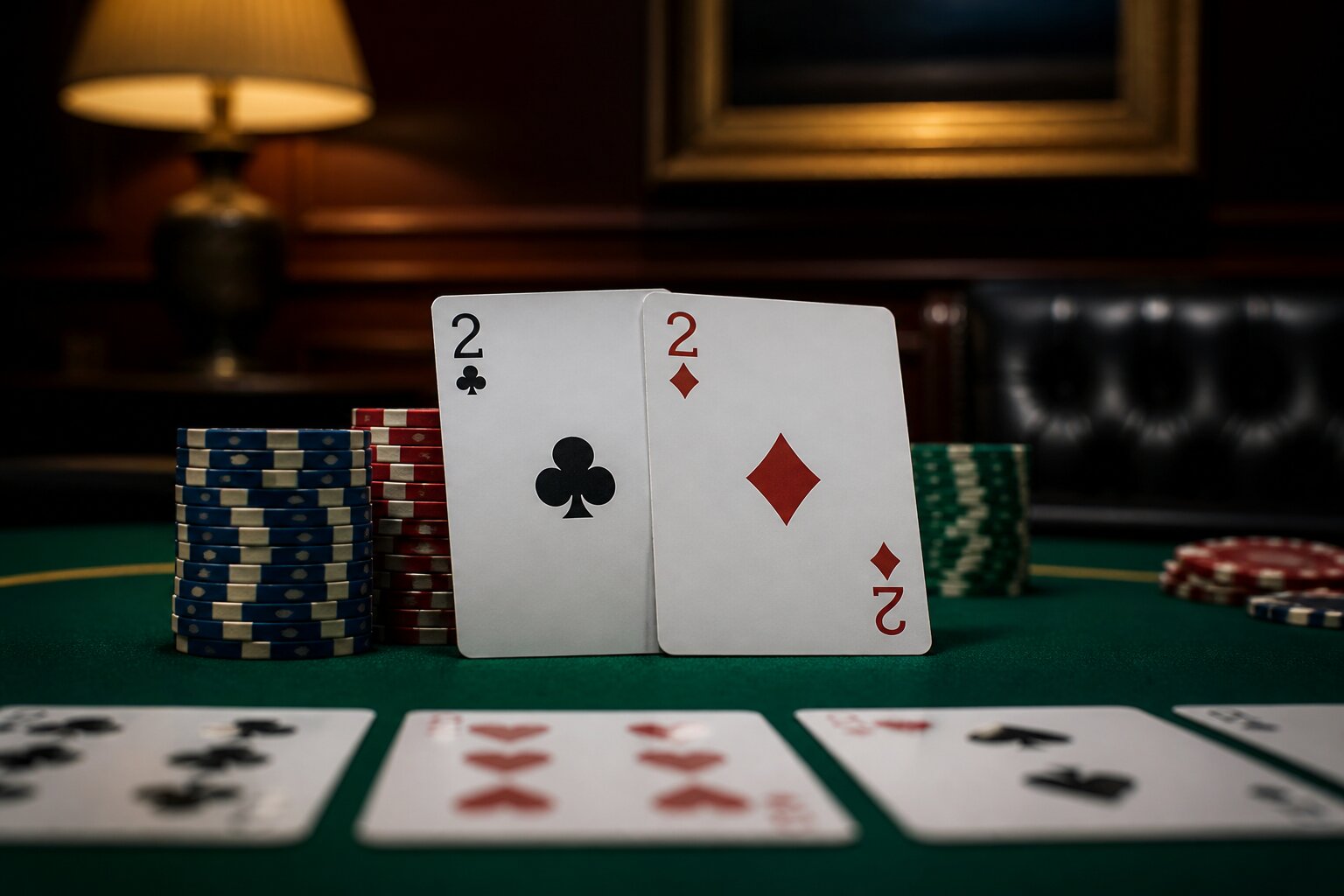
Ever wondered what it feels like to look down at your cards and spot a pocket pair? That little jolt of excitement is something every poker player recognises.
Not all pocket pairs are created equal. Some feel strong from the start, while others force you to think ahead. The lowest pocket pair in poker is a special case — tricky to play, often misunderstood, and sometimes unexpectedly useful.
Curious how to get the most from these small hands, or how to avoid common mistakes? Read on to explore the practical tactics and reasoning behind playing the lowest pocket pair.
What Is a Pocket Pair in Poker?
A pocket pair means both of your starting cards are the same rank. If you’re dealt two fives—one of hearts and one of clubs—that’s a pocket pair.
You’ll see pocket pairs in games where each player receives two private cards, such as Texas Hold’em. They’re called "pocket" pairs because those cards are visible only to you until you choose to reveal them.
Suit doesn't matter for a pocket pair; only the rank matters. Whether it’s a pair of twos, eights, or kings, the hand is a pocket pair and starts with the same basic advantage: you already hold a pair before any community cards are shown.
Why Is the Lowest Pocket Pair Important?
Pocket twos, commonly called deuces, occupy a distinctive strategic role. They rarely win large showdowns by themselves, yet they offer clear opportunities when the conditions are right. Playing them well requires patience and an understanding of how a small advantage can become profitable over time.
They prompt you to weigh several factors at once:
- position at the table and how that affects your ability to control the pot
- opponents’ tendencies, such as how often they fold or overcommit with weak hands
- stack sizes and whether you can realise implied odds if you hit a set
- the likely texture of the board and how it will play in multiway pots
One of the main reasons deuces are valuable is set-mining: calling modestly pre-flop in the hope of flopping a three of a kind. That strategy relies on implied odds — the chance to win a big pot when you hit — so it works best against callers who will pay you off and when your remaining stack justifies the call.
For newer players, mastering how to play small pairs teaches discipline. It encourages folding when the situation is unfavourable, observing opponents to spot profitable spots, and choosing precise moments to invest chips. These are habits that transfer directly to broader, more complex hands.
So, though tiny pairs are not flashy, they are useful training grounds for sound decision-making at the table. Play them sensibly, within your bankroll limits, and they can help improve both your technical play and your table awareness.
How Does the Lowest Pocket Pair Compare to Other Starting Hands?
Pocket twos are at the bottom of the pocket pair hierarchy. Compared with high pairs like aces or kings, they are much less resilient against aggression and are vulnerable to being outdrawn by higher pairs or by hands that improve on the board.
Still, they are stronger than two unpaired, low, uninspiring cards. Starting with a pair means you already begin with one made hand, which can be decisive in low-showdown situations or when your opponents miss the board.
Think of small pocket pairs as situational: they are valuable in certain contexts but require caution when opposition shows strength.
You’ve now seen where small pairs fit among other hands; next, we’ll unpack common misconceptions that can distort how they’re played.
Common Myths About Playing the Lowest Pocket Pair
There are a few persistent myths about pocket twos. One is that they are either worthless and should always be folded, or secretly unbeatable if you hit a set. Neither view is accurate.
The truth lies in situational play. Pocket twos can become powerful if they hit a set on the flop, but that happens infrequently. Equally, folding every deuce would be overly conservative and miss profitable opportunities—especially in multiway pots or when you’re positioned late and can control the size of the pot.
Correct handling comes down to reading the table, understanding pot odds, and recognising when your pair has become a liability rather than an asset.
Are low pocket pairs ever worth playing? Yes, but selectively: they are tools for specific situations rather than universal plays. With that perspective, it helps to know the likelihood of improvement on later streets.
Odds and Probabilities for the Lowest Pocket Pair
The probability of being dealt a specific pocket pair, such as two twos, in Texas Hold’em is roughly 1 in 221 hands, or about 0.45%.
If you do hold pocket twos, the chance of improving to a set by the flop is around 11%. Hitting on the turn or river increases the overall probability of improvement, but each additional draw is still relatively small.
Understanding these odds helps you judge whether to continue in a hand when facing bets. For example, if multiple opponents put money into the pot and the board shows higher coordinated cards, the value of a small pair diminishes because it’s more likely someone else has or will make a stronger hand.
These figures should guide your decisions rather than dictate them; combine them with reads on opponents and table context for best results. With the odds clear, let’s look at how considerations change across formats.
Tips for Handling the Lowest Pocket Pair in Various Poker Formats
How you treat pocket twos varies with the format you’re playing. In tournaments, where stacks can be limited, players often adopt a cautious stance: waiting for favourable position or shallow competition before committing chips. The potential to double up by hitting a set is tempting, but preserving your tournament life is usually the higher priority.
In cash games, where you can reload, there is more room to see flops with small pairs. The ability to keep pots small when you miss or to capitalise on draws by outplaying opponents post-flop makes deuces more playable—so long as you remain attentive to stack sizes and betting patterns.
Online play introduces faster rhythms and a wider variety of opponent types. Here, pocket twos may be used to exploit predictable players or to see cheap flops, but the speed of play also means you must be nimble in folding when the situation turns unfavourable.
Across formats, three recurring themes matter: control the pot size when you’re behind, look for opportunities to extract value when you’re likely ahead, and be mindful of the broader table dynamics rather than fixating on the small gap between a pair of twos and a higher pair.
Key Takeaways on Understanding Low Pocket Pairs
Low pocket pairs like deuces demand a measured approach. They’re not doomed hands, but neither are they automatic winners. The following points will keep your decisions grounded and effective:
- Holding any pocket pair gives you an initial made hand, but the lower the pair, the more the context of the hand determines its value.
- Knowing the odds of improvement helps you weigh whether to continue, but combine that with position, stack sizes and opponents’ actions for a fuller picture.
- Treat small pairs as situational tools: use them to exploit favourable conditions and avoid confrontations where the board or opposition suggests you are likely behind.
- Keep gambling choices controlled and planned; manage your bankroll and set limits so decisions remain strategic rather than emotional.
Played with patience and awareness, the lowest pocket pair becomes another useful element of your poker toolkit rather than a liability.
**The information provided in this blog is intended for educational purposes and should not be construed as betting advice or a guarantee of success. Always gamble responsibly.