
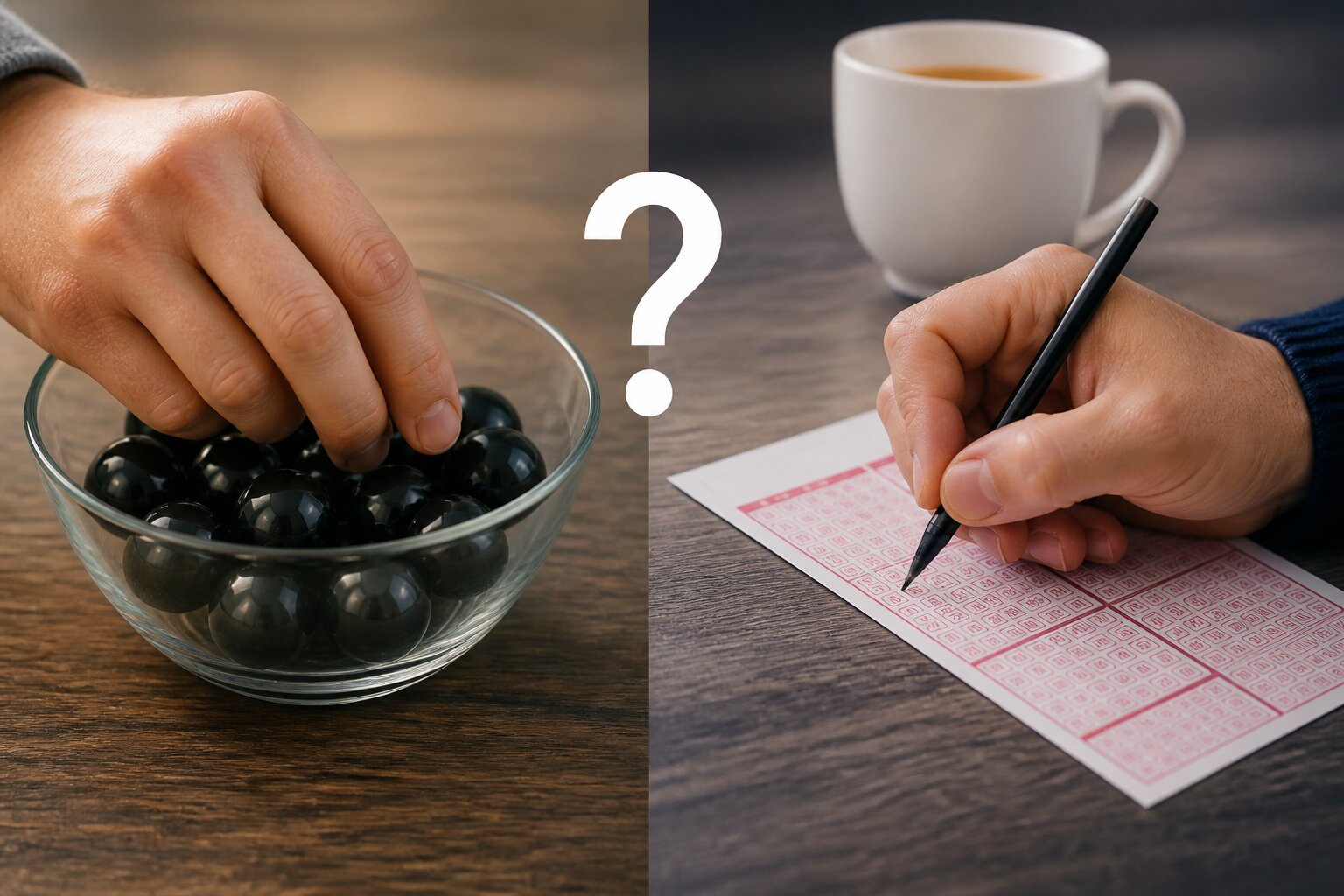
Every week millions of people face the same question at the till—should you pick your own numbers, or go for a Lucky Dip? It’s a decision many of us make on autopilot, whether we prefer meaningful dates or want the machine to pick for us.
Some players stick with the same set of personal numbers for years, while others like the simplicity of an automated selection. If you’ve ever wondered whether one method truly gives a better chance, this piece will walk you through the facts, debunk common ideas, and help you decide which approach suits you best.
Read on to understand how how both options work and what past results actually show about winners.
What Is a Lucky Dip and How Does It Work?
A Lucky Dip is the National Lottery’s term for a randomly generated set of numbers produced by the terminal or online system. Instead of choosing numbers yourself, the system selects a combination from the full pool for games such as Lotto, EuroMillions, or Thunderball.
The process is automatic and unbiased: the terminal draws numbers without any human input. You simply select the Lucky Dip option when buying a ticket and the ticket is printed or recorded with that set of numbers. It’s a fast way to play and is available for single tickets and syndicate entries alike.
You must be at least 18 to play. Treat the lottery as a form of entertainment and set a spending limit that fits your budget.
How Picking Your Own Numbers Differs from a Lucky Dip
Choosing your own numbers means you actively decide each figure on your ticket—birthdays, anniversaries, or sequences that feel meaningful. This adds a personal element to the ticket and can make the experience more enjoyable for some players. For many people the act of choosing is part of the ritual, offering a sense of control and involvement in the play.
By contrast, a Lucky Dip hands the selection over to the system. There is no personal input and no pattern; the numbers are generated from the same pool available to everyone. This can be useful when you want to save time, avoid decision fatigue, or simply prefer leaving the selection to chance.
The key distinction is simply whether you prefer personal involvement or convenience. Both approaches are common and neither changes the fundamental randomness of the draw, though they can affect how you feel about the ticket you hold.
Next we will take a closer look at what this difference means for your chances of winning.
Does Choosing a Lucky Dip or Your Own Numbers Affect Your Odds?
The odds are the same regardless of how the numbers are chosen. Lottery draws are random, so every possible combination carries the same probability of being selected. There is no method of number selection that changes the mathematical likelihood of winning.
Because of that, opting for a Lucky Dip or entering your own numbers will not improve your chances. Any suggestion that one option is more likely to win is unsupported by how draws are conducted. Each draw is independent, meaning the outcome of previous draws has no bearing on the chances in the next one.
People often feel that certain numbers are "due" or that patterns matter, but these are examples of common cognitive biases. The human mind looks for meaning and patterns even in random events, which is why anecdotes about particular numbers winning can seem persuasive despite being random occurrences.
Understanding the impartial nature of the draw can help set realistic expectations. Preferences for choosing numbers are perfectly fine, but they do not alter the underlying probabilities.
Common Myths About Lucky Dips and Self-Selected Numbers
Players often develop habits and beliefs that feel sensible but do not affect the outcome. These myths can influence how people choose numbers and the stories they tell afterwards, shaping personal rituals and the way friends or media recount a win. Such beliefs may add enjoyment or a sense of control, but they do not change the underlying odds.
Debunking Patterns and Superstitions
Some people believe certain patterns—diagonals on a play slip, sequences, or repeating digits—are more likely to be successful. In reality, the draw process treats all combinations equally; patterns have no bearing on the result. What looks like a pattern to us is just coincidence when examined within the context of random selection.
Ideas about “hot” or “due” numbers also arise from misreading random variation rather than reflecting any underlying process. Short-term streaks or gaps in number occurrences are typical features of randomness and do not indicate that a number is more or less likely to appear in a future draw. Treating these fluctuations as predictive can lead to mistaken conclusions about chance.
Are Winners More Likely to Choose One Method?
Media stories sometimes suggest a trend in winner behaviour, but there is no consistent evidence that jackpot holders favour one selection method over the other. Both system-generated and self-selected tickets have produced big winners, and the visible cases reported in news can give a distorted sense of frequency.
The appearance of a pattern among winners usually reflects the large number of tickets played and the variety of ways people choose to play. When many different selection methods are used across millions of tickets, coincidences and shared stories naturally emerge, creating the impression of a preference where none has been statistically established.
If you are curious about how winners actually pick their numbers, the next section looks at real-world examples and reporting. This helps to illustrate how anecdotes form and why they should not be taken as evidence that one method increases your chances.
National Lottery coverage and analysis can sometimes focus on memorable stories, but remember that anecdotes are not the same as statistical proof.
What Do Lottery Winners Actually Choose?
Winners come from all parts of the player base and use both selection methods. Public reports and prize announcements show a mix: some jackpot tickets were bought with numbers chosen by the player, others were Lucky Dips.
Trends Among Past Winners
Across published winner statements, the split between automated and self-selected tickets fluctuates over time and by draw. No stable pattern points to one method producing more winners. Given the huge number of tickets bought each week and the randomness of draws, variations in the proportion of winners using each method are expected.
Publicly available data is also limited, so apparent trends can be influenced by which stories are reported or by the timing of announcements. Media coverage may highlight particular winners or unusual stories, which can make one selection method seem more common than it actually is. Statistical fluctuation and reporting bias together mean it is difficult to draw firm conclusions from headlines alone.
Public Preferences and Perceptions
Many players keep using the same approach because it feels familiar. Some choose personal numbers for sentimental reasons, such as birthdays or anniversaries, while others favour Lucky Dips for the convenience and speed of a quick purchase.
When jackpots grow large, more people take part overall, which can make one method appear more common among winners simply because the player pool changes. That does not mean either method improves the chance of winning; both are subject to the same odds and the same randomness of the draw.
Next, consider the practical advantages and drawbacks of each approach to help choose the one that suits your preferences.
Pros and Cons of Lucky Dip vs Own Numbers
Both options have straightforward practical differences. Lucky Dip is efficient: it removes decision-making and tends to reduce the likelihood of duplicated tickets from popular date-based choices. It also speeds up play, which appeals to those who buy several tickets or join syndicates.
Choosing your own numbers makes the ticket feel personal. For some players, that attachment increases enjoyment. The trade-off is that commonly used sequences—birthdays or simple patterns—can increase the chance of sharing a prize if those numbers are drawn.
Neither approach changes the odds, so weighing convenience against personal preference is the sensible way to decide. The following section brings that choice into sharper focus for you as a player.
Which Should You Use: Lucky Dip or Your Own Numbers?
There is no objectively better option—pick the method that fits how you like to play. If convenience and variety matter, a Lucky Dip will do the job. It can add an element of surprise and remove the fuss of selecting numbers, which some players find more fun and less stressful.
If personal meaning makes the game more enjoyable, choosing your own numbers makes sense. Many people enjoy the ritual of picking dates or patterns, and that personal connection can make playing more engaging even though it does not change the chances of winning.
Whichever route you take, set a clear budget and play within it. Treat lottery tickets as entertainment rather than a financial plan, and keep expectations realistic. Remember that the odds are long, so only spend what you can afford to lose and consider it part of your leisure costs rather than an investment.
Summary: Which Lottery Option Is Best for You?
Neither a Lucky Dip nor self-selected numbers improves the chance of winning; both are merely different ways to produce a ticket. Choose based on whether you value convenience or personal involvement, and always play within an affordable limit. That way the experience stays enjoyable, and your approach to the game matches what you want from it.
**The information provided in this blog is intended for educational purposes and should not be construed as betting advice or a guarantee of success. Always gamble responsibly.