
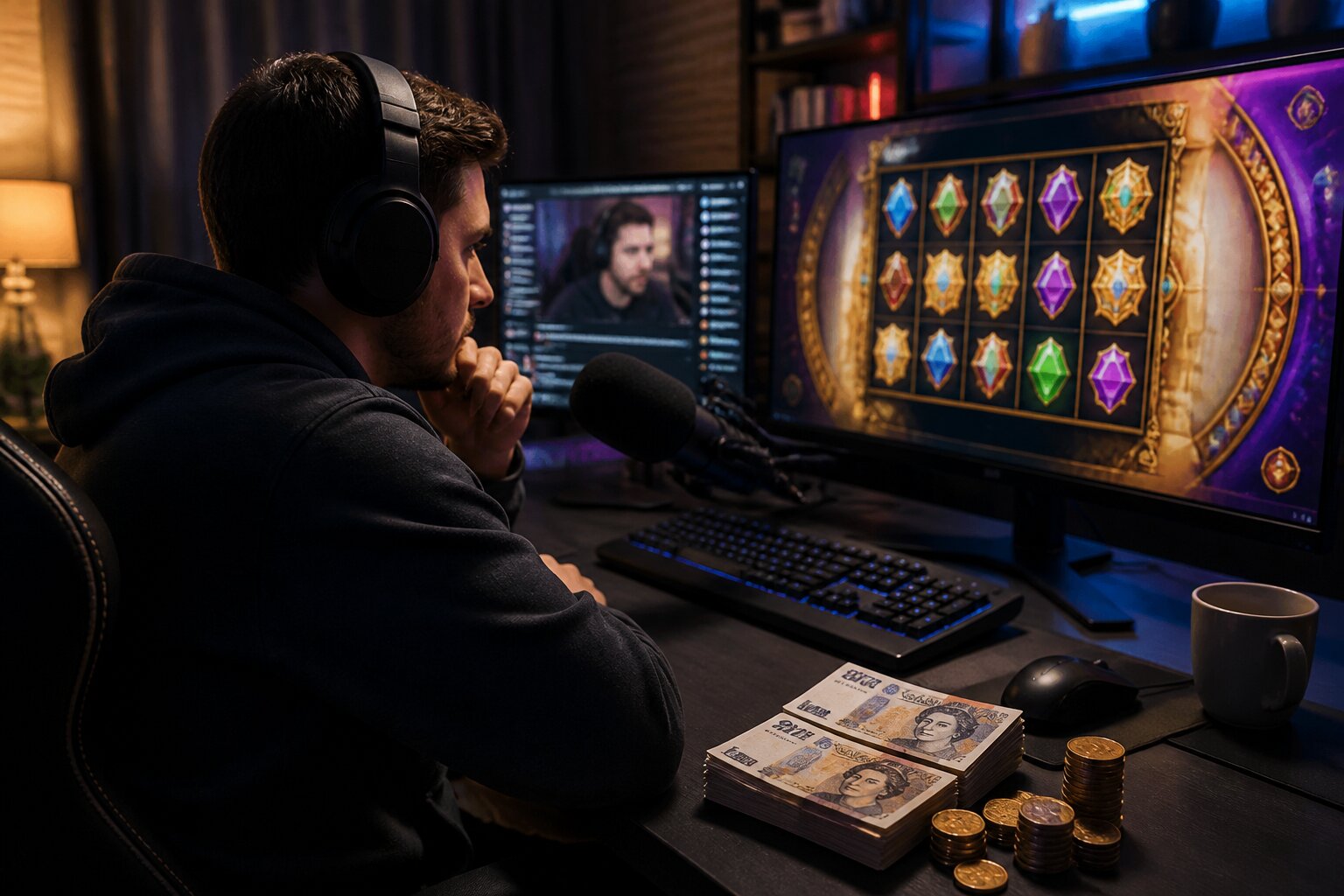
Ever watched someone spin the reels online and wondered if they’re actually risking their own cash—or if it’s all a bit of smoke and mirrors? Slot streamers have become online celebrities, broadcasting big wins and losses to thousands. With gigantic bets and dramatic reactions on display, it’s natural to question how much of it is genuinely real.
Are these players staking their own money, or do casino deals, bonuses or demo modes do more of the heavy lifting than they admit? If you’re curious about how online casino streaming really works, these are the key questions to answer before you decide what to make of the spectacle.
What Are Slot Streamers & How Do They Work?
Slot streamers record themselves playing online slot games and share these sessions live on platforms like Twitch and YouTube. Viewers see the streamer’s screen and reactions in real time, and can interact through live chat. Typical streams show spins, bonus rounds and the streamer’s commentary, creating a blend of gameplay and entertainment.
Many streamers build large followings by reacting to big moments, hosting themed streams around new releases, or running marathon sessions. Content is usually age restricted and aimed at adults. The format gives a close-up view of how slots behave and what outcomes can look like on screen, but what a viewer sees is not always the same as the typical player experience. That distinction becomes important when considering how streamers fund their play, which is the next area to examine in detail.
Do Slot Streamers Use Real Money or Fake Funds?
Streamers fund their sessions in a few different ways, and these choices change how authentic the on-screen experience is.
Some streamers use their own money, depositing into an account and wagering genuine cash. Wins and losses here mirror what an ordinary player might encounter. Others use demo mode, where no real money changes hands and winnings cannot be withdrawn; demo play demonstrates game features without reflecting real risk. A third option is that casinos provide streamers with bonus credits, boosted balances or other promotional funds to encourage big-stakes play.
These sponsored or promotional funds can be shown on-screen exactly like real cash, but they often come with terms and restrictions that viewers do not see. That difference affects how credible the stream appears and whether the session reflects standard player conditions. If you want to judge authenticity, the funding method is a crucial clue—so the next section looks at practical signs that a streamer might not be using their own money.
Signs a Slot Streamer Might Not Be Using Real Money
Several behaviours can indicate that a streamer is playing with demo funds or sponsored credits rather than their own deposits.
One hint is consistently high stakes without the usual reactions to losses. Repeatedly wagering large amounts and showing little concern when losing runs occur suggests the real financial impact may be limited. Another sign is the absence of visible account activity such as deposits or withdrawals; real play typically involves topping up balances or cashing out occasional wins.
Frequent balance top-ups or constant access to exclusive promotions also look suspicious, particularly if those offers are not available to ordinary players. Finally, if a streamer avoids or deflects questions about funding or demo modes, that lack of transparency is a clear warning.
Spotting these signals helps viewers separate entertainment from a realistic depiction of gambling. With those indicators in mind, it’s also useful to understand how casinos and streamers interact commercially, which can shape what appears on stream.
Can Online Casinos Sponsor or Fund Streamers?
Casinos may sponsor or fund streamers to promote their games. Sponsorship can include direct payments, complimentary spins, boosted balances or exclusive bonus deals given to the streamer for use on stream. For the casino, this places their product in front of a ready audience and can drive interest in new releases or promotions.
These commercial arrangements change what viewers see. A streamer using sponsored funds is likely to play longer or place larger bets than a typical player would, and the content may be edited or selected to emphasise entertaining moments. Transparency matters: paid partnerships should be disclosed so viewers can judge how representative the stream is of everyday play.
Sponsorship also brings regulatory obligations, which leads into the legal and ethical framework streamers and casinos must follow.
Legal and Ethical Concerns Around Slot Streaming
In the UK, streaming activity that promotes gambling sits within strict regulatory and ethical boundaries. Advertising and promotion rules are designed to protect adults and prevent content that might appeal to under-18s or vulnerable people. Streams carrying gambling content are expected to display age restrictions and appropriate signposting to support services where needed.
Ethically, streamers should disclose how they fund their sessions and be clear about any paid partnerships or promotional credits. Misleading viewers by portraying demo play as real-money gambling or hiding the presence of sponsored funds creates a false impression of how slots perform. Responsible practice includes transparent disclosures and signposting to support resources such as BeGambleAware.org when appropriate.
Casinos also have duties when providing incentives to streamers: arrangements must be fair, clearly disclosed, and comply with marketing codes. These legal and ethical constraints help ensure that streamed content is not presented as a guarantee of positive outcomes.
How Can Viewers Tell If a Streamer Is Authentic?
There are practical checks viewers can use to assess authenticity. Transparent streamers often state whether they are using their own funds, show account activity, and are open about sponsorships. They also present a range of sessions that include losing runs as well as wins, giving a more balanced view of play.
Are streaming results representative of real play? Often they are not. Streams commonly highlight wins and may downplay or edit out losing stretches. Where sponsorships or bonus balances are involved, sessions will further diverge from typical experiences. For most players, gameplay involves stretches of losses with occasional wins rather than a steady sequence of big payouts.
What warning signs should viewers look for? Watch for the streamer not showing deposits or withdrawals, placing very large bets without visible concern for losses, frequent unexplained balance top-ups, and avoidance of questions about funding or demo mode. Also check for clear age guidance and any disclosures about partnerships.
Treat slot streams primarily as entertainment. If a stream prompts interest in playing, take time to research the game and the site, check terms for any promotions, and be aware of the differences between demo, sponsored and true deposit play. Keep personal limits in place and make choices that fit your own circumstances.
Play Slots Online at Money Reels
We’d love for you to be part of our friendly community of players at Money Reels, where the focus is on entertainment and enjoyment. There’s plenty to discover with us, surrounded by like-minded people who share your enthusiasm for slots.
Getting started is straightforward: simply create an account, make a deposit and you’ll be ready to play. We look forward to welcoming you and sharing the experience together.
**The information provided in this blog is intended for educational purposes and should not be construed as betting advice or a guarantee of success. Always gamble responsibly.