
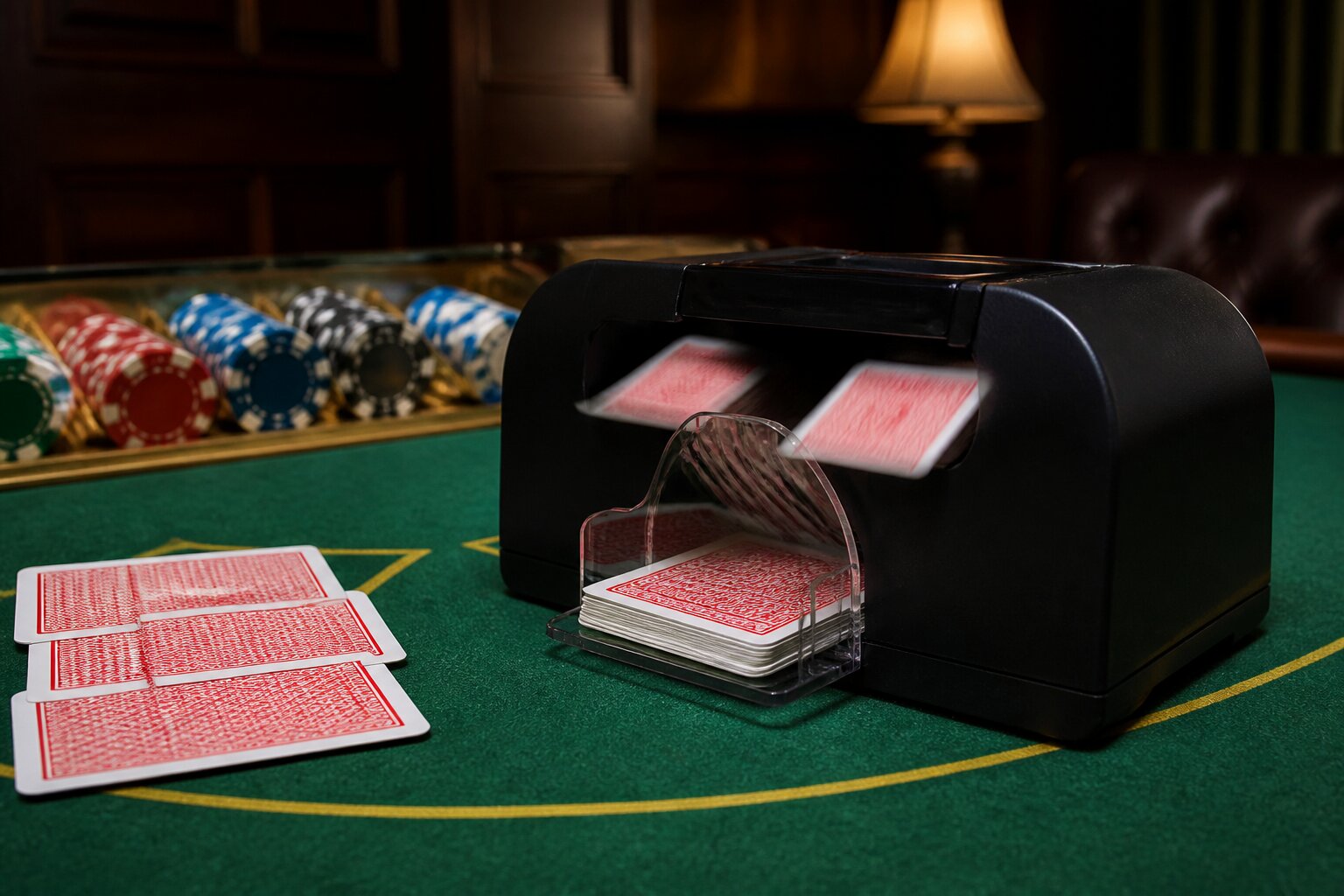
Automatic card shufflers are a common sight at casino tables across the country, promising faster play and thorough mixing of cards. For many players, that convenience raises a practical question: how do these machines work, and can they be trusted?
If you’ve ever wondered whether a shuffler could be biased or tampered with, this article walks through how the machines operate, how casinos protect them, and what to look for if something seems off. Read on to get a clear picture of shuffle machine integrity and what it means for your game.
What Are Automatic Card Shufflers & How Do They Work?
Automatic card shufflers are devices built to mix playing cards quickly and consistently between rounds. Their core purpose is simple: take one or more decks, rearrange the order of the cards, and present a shuffled pack that dealers can use immediately.
There are a few common designs. Some shufflers feed cards into separate compartments and interleave them mechanically, while others use electronically driven mechanisms to randomise the order. Models vary by capacity: single-deck units suit smaller games, while multi-deck machines handle games like blackjack where several decks are used together.
The process combines mechanical movement with defined algorithms in the machine’s control system. The mechanical part physically moves cards; the control system times and coordinates those movements. Because the motions are repeatable and consistent, the machines reduce human error that can arise from hurried or imperfect hand shuffling. That consistency is one reason casinos favour them: they speed up play and create a predictable baseline for how shuffling is performed.
Can Shuffle Machines Be Tampered With?
Casinos treat shuffle machines as critical equipment and protect them accordingly. The machines themselves are manufactured with tamper-resistant features: sealed access panels, secure fastenings and internal logs in many models that record faults or unusual activity. Staff are trained to spot signs of interference and follow procedures if anything seems off.
Surveillance is another layer of protection. Table areas are routinely monitored so any attempt to access machines improperly would likely be noticed. When a machine does show a fault, it’s usually taken out of service and examined by technicians to establish the cause.
No system is invulnerable, so casinos combine hardware safeguards, staff oversight and monitoring to lower the chance of interference to a very small level. That layered approach is why most concerns about tampering are resolved quickly and why such events are rare.
Do Casinos Regularly Test Their Shuffle Machines?
Yes. Regular testing forms part of a casino’s quality control. Routine checks cover both the machine’s mechanical parts and the software that governs its behaviour. Technicians inspect moving parts for wear, ensure sensors are functioning, and review any internal error logs the device produces.
Beyond in-house checks, independent testing plays a role in confirming fair operation. Third-party laboratories can assess whether a machine’s output meets accepted randomness standards and whether there are any design faults that might bias results. Where regulation applies, licensed venues must demonstrate those checks to the regulator as part of their compliance obligations.
If a test reveals a problem, the machine is serviced and retested before returning to use. These steps reduce the risk of a faulty unit influencing play and provide documented assurance that equipment is operating correctly.
Are Shuffle Machines Fairer Than Manual Shuffling?
Both approaches to shuffling — automatic and manual — have strengths. Automatic shufflers offer consistency: the same process is applied every time, which cuts down on human error and predictable patterns that can occur with hand shuffling. For busy tables, machines also maintain a steady pace of play without shortcuts.
Manual shuffling relies on trained dealers who follow standard procedures. When performed correctly, hand shuffling can be perfectly acceptable and is still used in many settings. Casinos combine manual checks, observed procedures and surveillance to limit human error or misconduct.
Which is “fairer” depends on context: automatic machines provide uniformity and speed, while manual shuffling relies on staff competence and oversight. In practice, the regulatory framework and the venue’s operating procedures are more important than the method itself, because they set the standards both methods must meet.
Common Myths About Automatic Card Shufflers
Shuffle machines attract myths because they aren’t always visible to players in action and their workings can seem technical. A frequent misconception is that a machine can be programmed to favour certain outcomes. In reality, reputable shufflers are engineered simply to mix cards; they don’t contain features that single out particular cards or hands.
Another persistent belief is that the casino can remotely control a machine to influence results. Most shufflers are stand-alone devices with limited external connectivity, and where connectivity exists it is for maintenance or logging rather than influencing play.
Finally, some think that a perfectly “random” order is guaranteed by design. Randomness is a statistical property: tests and audits confirm whether a machine’s output fits expected distributions, but individual hands will naturally vary. That variation is not the same as bias, and the checks described earlier are intended to distinguish between normal variance and a genuine fault.
Are Casinos Secretly Controlling Results With Shuffle Machines?
Concerns that casinos secretly control card order using shufflers are understandable, but such practices would breach industry rules and invite serious consequences. Manufacturers and operators face regulatory and commercial incentives to ensure equipment performs as expected, and regulatory oversight includes checks on both devices and operating procedures.
Where controls are in place, they focus on ensuring reliable function, proper maintenance and clear records of incidents. Those measures make it difficult for any party to use a machine to influence outcomes without detection.
If you want reassurance while at a table, you can observe how the device is handled between rounds and ask staff about the machine’s maintenance schedule. Open, professional venues will explain their processes and address reasonable questions.
Signs Of A Reliable Shuffle Machine In Casinos
There are practical clues that a casino is maintaining its shuffle machines responsibly. Certification marks or service labels on equipment indicate that the device has passed standard checks or been inspected by a recognised tester. Visible maintenance, such as staff cleaning or servicing machines during off hours, also shows attention to upkeep.
Operational consistency is another sign: machines that function quietly and reliably without frequent faults suggest good maintenance practices. Clear procedures at the table — for example, taking a machine out of service immediately if it malfunctions — point to an organisation that prioritises integrity.
Above all, using licensed, well-run venues offers the best assurance. Licensing requires operators to maintain equipment to regulatory standards and to have processes for handling complaints or unusual incidents.
What To Do If You Suspect A Rigged Card Shuffler
If something about a shuffler’s behaviour appears unusual, the most effective first step is to raise the matter calmly with the table manager or floor supervisor. They can examine the device, remove it from play if necessary, and explain any technical issues or maintenance actions taken.
Should you remain unconvinced by the venue’s response, asking for the casino’s formal complaints procedure is appropriate; licensed operators are required to have one. If the issue is not resolved to your satisfaction, there are independent bodies that handle disputes and regulatory complaints. These routes exist to protect players and ensure equipment is held to required standards.
Maintaining clear records — for example, noting the time, table number and staff you spoke to — helps if you choose to escalate the matter.
Final Thoughts On Shuffle Machine Integrity
Automatic card shufflers are engineered to add consistency and efficiency to casino play. While no system is beyond scrutiny, the combination of manufacturing safeguards, routine testing, independent checks and venue procedures means the chances of a machine being used to skew results are very low.
If you have questions during a visit, staff are usually willing to explain how equipment is maintained and tested. And if you ever suspect a problem, there are established routes to have it investigated. Play in licensed venues and raise concerns promptly so the protections designed to keep games fair can work as intended.
**The information provided in this blog is intended for educational purposes and should not be construed as betting advice or a guarantee of success. Always gamble responsibly.