
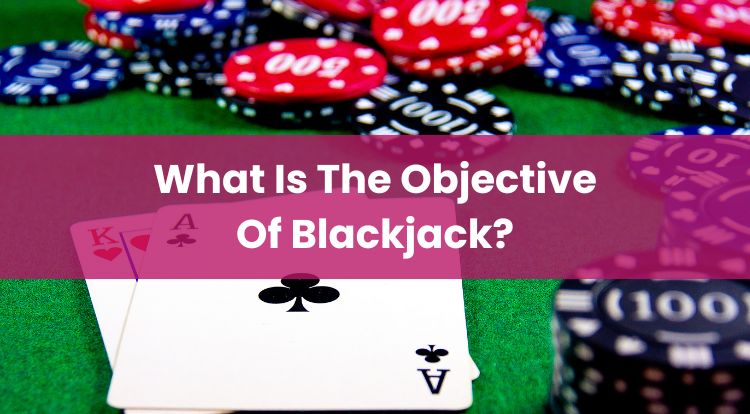
Blackjack is a casino card game where the aim is simple: finish with a hand total that beats the dealer’s without going over 21. It is not about reaching 21 every time, but about ending the round with a stronger total than the dealer.
For beginners, the basics can feel a bit much at first. Once the key ideas fall into place, though, the rest of the game starts to make sense. Card values, how dealing works, the options available on each hand, and how payouts are calculated all fit together as part of one smooth process.
This article explains the objective, hand values, dealing, the dealer’s rules, table layout and limits, bets and payouts, player actions, insurance, pushes and blackjacks, and common rule variations. If you choose to play, set sensible limits and keep it as occasional entertainment.
How Are Cards Valued In Blackjack?
In blackjack, each card has a set value that determines the strength of a hand.
Number cards from 2 to 10 are worth their face value. A 6 counts as six points, an 8 counts as eight.
All face cards (Jack, Queen, King) are valued at ten.
The Ace is flexible. It can count as either one or eleven, whichever helps the hand more. A hand of Ace and 7 can be worth 8 or 18. When an Ace counts as eleven, the total is often called a “soft” total because it can drop to a “hard” total by treating the Ace as one if another card is drawn.
With values clear, the next step is understanding how the cards arrive on the table.
How Does Dealing Work At A Blackjack Table?
At the start of each round, everyone at the table, including the dealer, receives two cards. Players’ cards are dealt face up. The dealer takes one card face up (the upcard) and one face down (the hole card).
This layout gives players a full view of their own hands and the dealer’s upcard before making any decisions. After player actions are complete, the dealer reveals the hole card and finishes the hand following the table’s rules.
What Are The Dealer’s Rules And Obligations?
The dealer follows fixed instructions that apply every round. In most games, the dealer must draw cards until reaching at least 17. On 17 or more, the dealer must stop.
A common variation is how a “soft 17” is treated. Some tables require the dealer to hit on soft 17 (for example, Ace-6), while others require a stand. This single difference can slightly change how often the dealer improves or busts, and it is usually shown on the table felt or in the game rules.
Because the dealer has no discretion, players can focus on their own decisions rather than guessing what the dealer might do next. With that in mind, it helps to know how the table itself is set out and how much can be wagered.
Table Layout And Betting Limits
A standard blackjack table is semi-circular, seating around five to seven players. Each seat has a clearly marked betting area for chips. The dealer stands opposite, on the straight edge of the table.
The felt shows where to place bets and may display key rules, such as the dealer standing or hitting on soft 17. Betting limits are posted at each table, indicating the minimum and maximum stake per hand, such as £5 minimum and £500 maximum. Players place chips within those limits before cards are dealt.
Online blackjack follows the same principles, with on-screen markers replacing the felt and chip areas. Once bets are down, attention turns to what those wagers can return.
How Do Bets Work And How Are Payouts Calculated?
Before cards are dealt, each player places a bet within the posted limits. After the hand is complete, the outcome decides whether the bet is paid, lost, or returned.
If a player’s final total beats the dealer’s without going over 21, the usual payout is 1:1. For example, a £20 win returns £20 in winnings plus the original £20 stake.
If a player’s first two cards form a blackjack (an Ace plus any ten-value card), the standard payout is typically 3:2. A £10 stake would return £15 in winnings, plus the original £10. If the player and dealer tie on the same total, including both having blackjack, the result is a push and the original stake is returned.
Now that the stakes and returns are clear, the next piece is how players choose to play their hands.
Actions: Hit, Stand, Surrender, Double Down, and Splitting Pairs
In blackjack, players make decisions in turn after the initial deal. These actions shape the hand’s outcome.
Hit: Take another card to try to improve the total. Players may hit multiple times, provided the total does not exceed 21.
Stand: Take no more cards and keep the current total.
Surrender: On some tables, a player may forfeit the hand immediately after the initial deal and recover half the stake. This option is not offered everywhere and is often limited to the first decision.
Double Down: Increase the original bet by up to 100% and receive exactly one more card. Many tables restrict doubling to certain totals, commonly 9, 10, or 11, and some allow doubling after a split.
Splitting Pairs: If the two starting cards are the same value, they can be split into two separate hands by placing an extra bet equal to the original. Each hand is then played on its own. Some tables restrict re-splitting, and many allow only one card per split Ace.
What Is Insurance And When Is It Offered?
Insurance is a separate side bet offered only when the dealer’s upcard is an Ace. It is a wager on the dealer’s hole card being a ten-value card, which would give the dealer blackjack.
The insurance bet is usually half the size of the main stake and pays 2:1 if the dealer does have blackjack. If not, the insurance bet is lost and the main hand continues as normal. Some tables also offer “even money” when a player holds a blackjack against a dealer Ace, which is simply an insurance payout structured to return 1:1 immediately.
What Happens On A Push Or Blackjack?
A push occurs when the player and dealer finish with the same total. The bet is returned, and there is no win or loss.
A blackjack is an Ace with a ten-value card on the first two cards. If the player has blackjack and the dealer does not, the usual payout is 3:2. If both have blackjack, it is a push and the original stake is returned.
Common Rule Variations And Their Impact
Blackjack follows core principles, but small rule changes can influence how a game plays.
- Dealer rules: Some tables require the dealer to hit on soft 17, while others require a stand.
- Decks in use: Games may use one deck or several. More decks can slightly change the frequency of certain hands.
- Doubling and splitting: Rules vary on doubling after a split, re-splitting pairs, and how split Aces are handled.
- Surrender: Not all tables offer it, and those that do may offer it only at specific times.
- Payouts: While 3:2 is the traditional blackjack payout, some tables offer 6:5 or other alternatives, which changes the return on a blackjack.
Checking the table rules before playing helps set expectations and avoids surprises. If gambling starts to affect your well-being or your finances, seek support early. Independent organisations such as GamCare and GambleAware provide free, confidential help.
Play Casino Games Online at Money Reels
If you would like to play casino games online, Money Reels offers a straightforward way to explore slots, table games, and bingo in one place. Game information is presented clearly, so you know what to expect before you start.
Money Reels is licensed and regulated by the UK Gambling Commission, and tools are available to help you set deposit limits, reminders, and account controls that suit your circumstances.
If this sounds right for you, create an account with Money Reels, add funds, and explore the games at your own pace. Only play with money you are prepared to spend for entertainment, and use our safer gambling tools whenever you need them.
**The information provided in this blog is intended for educational purposes and should not be construed as betting advice or a guarantee of success. Always gamble responsibly.