
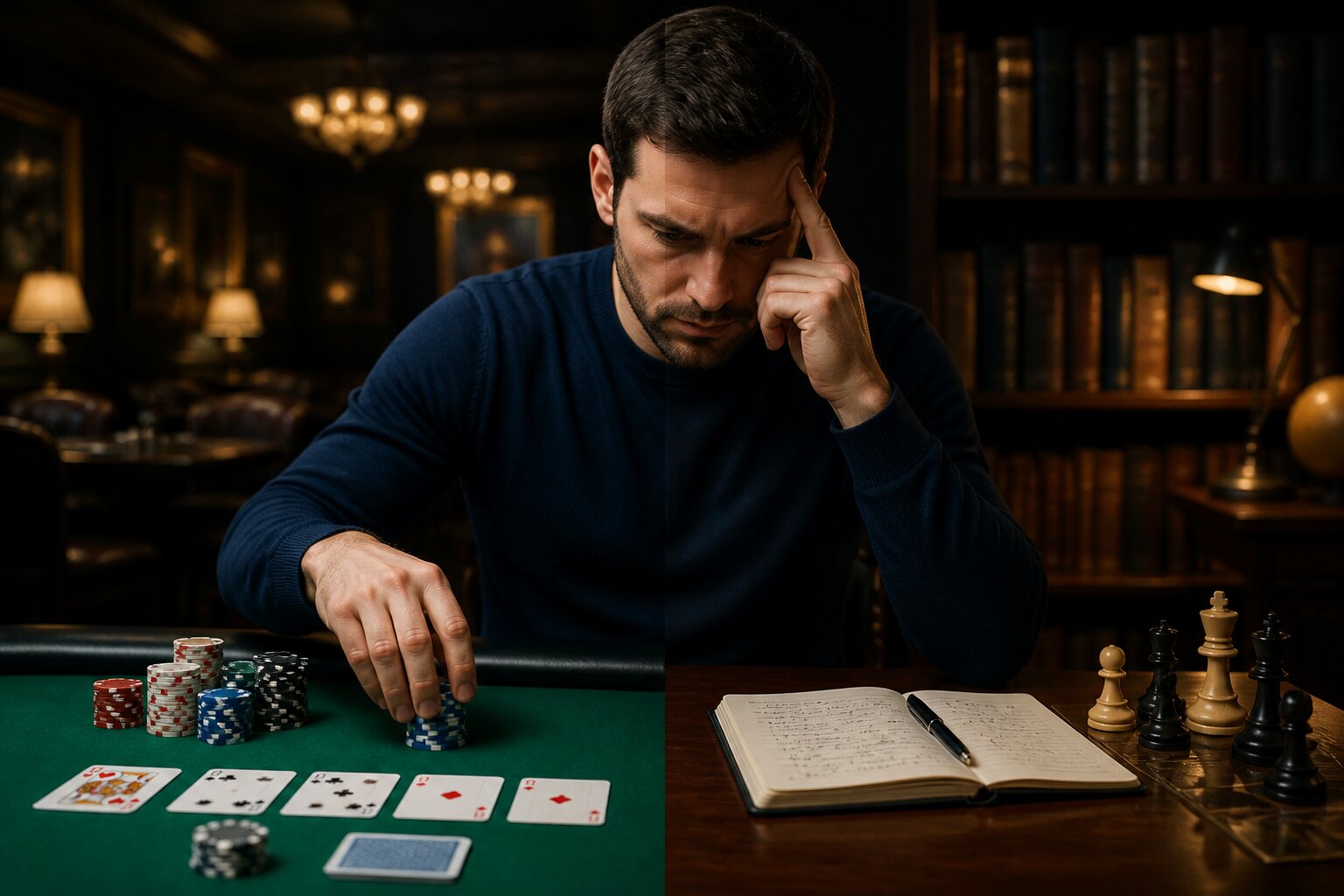
Ever wondered whether poker sits with the likes of football and cricket, or if it belongs at the casino table alongside roulette and blackjack? With millions of players following poker on TV and online, it has the competition and spectacle of top-level events, but it also involves money and elements outside a player’s control.
So where does poker truly fit: a test of skill or an activity regulated as gambling? This article breaks down how poker is viewed in the UK, the role of skill and chance, the legal position, and common misconceptions — read on to get the full picture.
What Defines a Sport Versus Gambling?
In the UK, official definitions help set the boundaries between what counts as a sport and what counts as gambling.
Organisations that oversee sport tend to emphasise physical or mental effort, structured competition, and clear rules. Mind sports such as chess are recognised as competitive activities that rely on mental ability rather than physical exertion. Gambling, by contrast, centres on staking money or something of value on an outcome where chance is a material factor.
The practical difference lies in purpose and method: sport is judged on performance, training and competition, whereas gambling focuses on wagering and outcomes that are partly or wholly influenced by randomness. These distinctions are important because they determine how an activity is regulated, the protections put in place for participants, and the public perception of the activity.
The Role of Skill in Poker: Fact or Fiction?
Poker combines decision-making, psychology and probability, so skill is clearly part of the game. Research, including academic studies, shows that experienced players use strategy, risk management and pattern recognition to improve their results over time. They make choices about betting, bluffing and pot control based on information available in the game.
At the same time, each hand involves a random deal of cards and short-term outcomes can go against even the most skilled player. That randomness means single sessions are volatile, while longer-term results tend to reflect a player’s ability more accurately. In short, skill shapes how well someone can perform across many sessions, but it does not eliminate the impact of random outcomes in any given hand.
Playing with an awareness of both elements — skill and randomness — helps explain why poker attracts players who enjoy strategic competition while also understanding the financial risks involved.
Legal Status of Poker: How Is It Classified?
Poker occupies a distinct place in UK law: it is recognised as a game where both skill and chance are present, but the presence of chance is sufficient for it to be treated as gambling under the Gambling Act 2005. That classification determines the regulatory framework that applies.
Operators offering poker, whether in casinos, clubs or online, must comply with licensing requirements and consumer-protection rules. Those regulations cover fair play, anti-money-laundering checks, identity verification and measures to prevent underage participation. The law also sets out obligations for advertising and how games are conducted to ensure transparency and player protections.
This legal approach aims to allow competitive poker while making sure that participation takes place in a regulated environment offering safeguards for players.
Poker in UK Law
The courts and regulators have examined poker’s mixed character — combining skillful decision-making with chance — and the legal outcome is consistent: poker is regulated as gambling. That has practical effects, such as how taxes and winnings are treated, the licensing conditions for venues and platforms, and the consumer protections that must be in place.
Regulation also means that disputes over fairness, game integrity and operator conduct can be addressed through established channels. For anyone playing for money in the UK, that regulatory framework is what creates a level of consumer reassurance that standards are enforced.
Society’s Perception: Why Is Poker Often Misunderstood?
Public views about poker vary widely, which helps explain the misunderstandings that persist.
Some people picture poker as high-skill competition because of televised tournaments and celebrated professionals. Others associate it with gambling harm and financial risk because money is wagered and outcomes can be unpredictable. This split is reinforced by media portrayals that either glamorise professional play or highlight stories of large losses.
There are also mistaken beliefs about consistency of results, with some assuming skilled players always win. In reality, even the best players experience losing stretches because of the game’s random elements. A balanced view recognises poker as a competitive activity with real strategic depth, but one that also carries financial risk that should be managed.
To move the conversation forward, it helps to separate the competitive appeal of poker from the practical responsibilities of playing for money.
Common Myths About Poker’s Nature
Several myths cloud public understanding of poker, and clearing them up helps set realistic expectations.
One myth is that poker is purely a matter of chance. While short-term randomness affects individual hands, skill influences long-term outcomes through better decision-making and bankroll management. Another myth is that poker is an easy route to earning money; in practice, consistent profit requires study, discipline and effective risk controls. A third misconception is that only professionals win; while professionals may have an edge, non-professional players can improve and enjoy success without making poker their livelihood.
Dispelling these myths is not just about correcting ideas, it also helps players approach the game sensibly — understanding that improvement is possible, but that financial risk remains.
Does Poker Develop Skills Like Traditional Sports?
Poker can build several transferable skills, though they differ from those developed in physical sports.
Players often sharpen their analytical thinking, probability assessment and emotional discipline. Competitive play can boost focus, patience and the ability to make decisions under pressure. In face-to-face settings, observational skills and interpersonal reading are also honed.
However, these gains tend to be specific to decision-making and self-regulation rather than physical fitness or team-based coordination. While those mental skills can be useful in wider contexts, they do not change the game’s legal status or remove the financial risks involved in staking money.
If you’re interested in the learning aspect, viewing poker as a way to practise strategic thinking is helpful — provided participation is deliberate and within safe limits.
Conclusion: Where Does Poker Truly Belong?
Poker sits between skill-based competition and chance-based wagering, and UK law reflects that balance by treating it as gambling while recognising the role of skill. The regulatory framework ensures games are offered under conditions designed to protect players and preserve integrity.
Players who enjoy the strategic challenge can take comfort that competitive poker is permitted within a regulated environment, but it’s important to be clear-eyed about the financial exposure involved. Approach the game informed and with limits in place, and treat it as a competitive pastime rather than a source of income.
If you want to explore poker further on this site, you’ll find information about how games operate, what to expect from regulated platforms, and how to manage risk responsibly. Play within your means and enjoy the strategic side of the game — that way it stays an engaging activity rather than a source of harm.
**The information provided in this blog is intended for educational purposes and should not be construed as betting advice or a guarantee of success. Always gamble responsibly.