
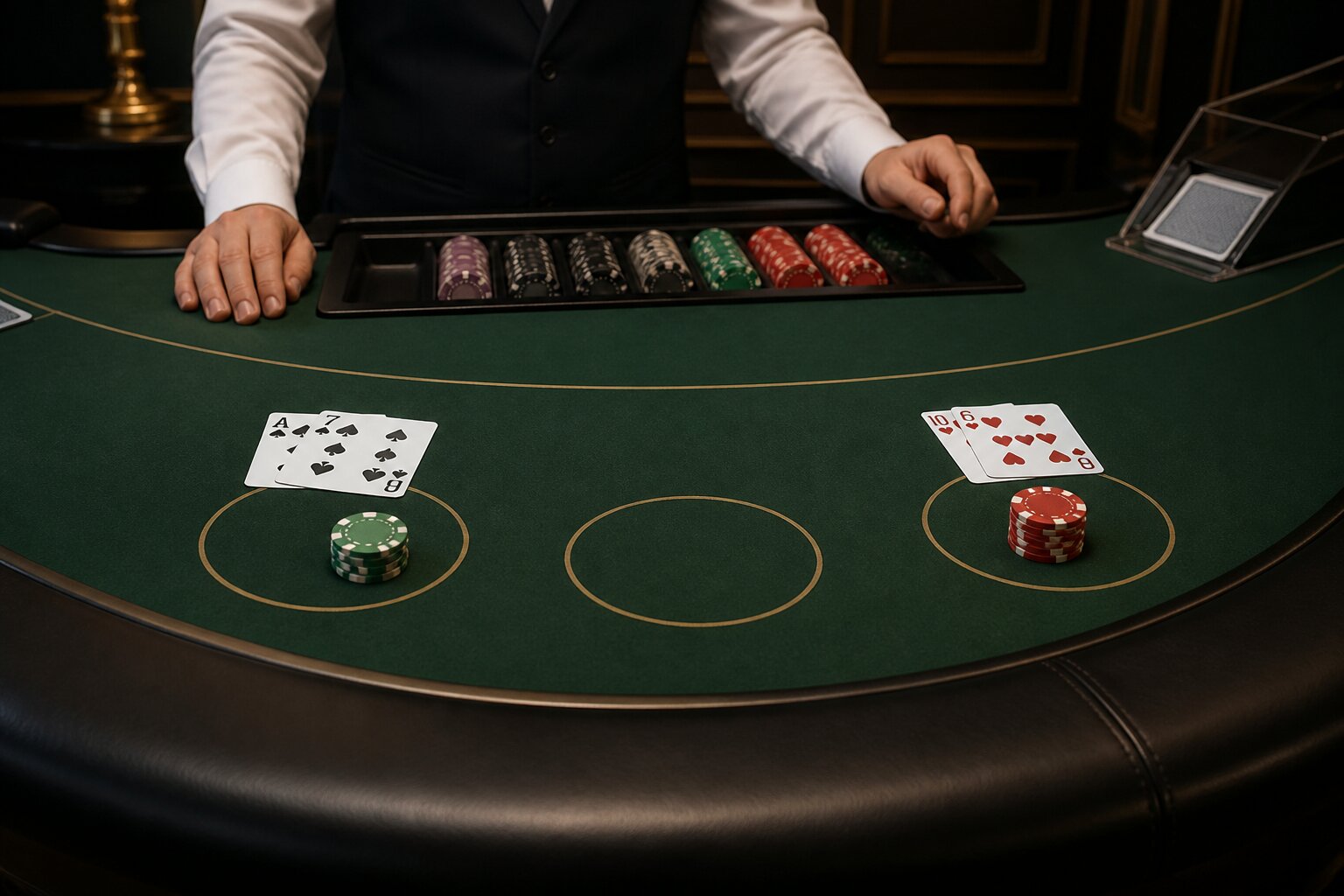
Ever sat at a blackjack table, online or in a casino, and wondered whether playing two hands at once changes your chances? It’s a common question. Doubling the number of hands feels like it could alter the rhythm of play or the returns, but the underlying maths and house edge behave in set ways.
This article explains what really changes when you take on two hands instead of one, how that affects your exposure and expected return, and how to choose the style that fits you best.
Comparing Blackjack Game Formats: One Hand vs Two Hands
Most blackjack tables offer the choice to play one hand or two hands. The rules stay the same either way, so the main differences are in how you manage your bets and decisions.
Playing a single hand is simple and focused: one stake, one set of decisions, and a clear view of outcomes as the dealer resolves the round. This makes it easier to follow basic strategy and manage your bankroll. With two hands you place two separate bets and receive two independent sets of cards, which means twice the decisions each round. You can treat each hand differently — for instance, standing on an 18 with one and taking a hit on a 16 with the other — which some players find more engaging.
Although two-hand play raises the tempo, it does not alter the game rules or payouts. The house edge and payout structure remain unchanged. What does shift is the volume of action and the amount of money you have at risk each round. If you want to know how that increased exposure translates into odds and theoretical returns, the next section shows exactly how each hand is treated.
How Do the Odds Change When You Play Multiple Hands?
Each blackjack hand is an independent contest against the dealer, so the probabilities for a single hand do not change because you are also playing another hand. The shuffled shoe, table rules and payout ratios govern the odds, and they apply to every hand dealt.
What does change when you play two hands is the number of outcomes you experience per round. You will see twice as many wins, losses and pushes over the same number of rounds, which increases variance in the short term. This can mean larger swings in your bankroll: two winning hands in one round boosts your winnings, and two losing hands magnifies losses. Your chance of leaving a single round ahead may rise slightly simply because there are more opportunities to win at least once, but that does not improve the probability for any individual hand.
In short, playing multiple hands increases exposure and variance without changing the per-hand probabilities or the long-term expected return. The following section examines how this ties into the concept of RTP.
Does Playing Two Hands Affect RTP in Blackjack?
Return to Player (RTP) expresses the theoretical percentage of wagers returned to players over time. In blackjack, RTP is calculated per individual wager and is determined by the rules and payouts. For many standard blackjack variants with correct basic strategy, RTP sits near 99.5%, though specific rule sets can nudge that figure up or down.
If a game advertises a given RTP, that percentage applies to each bet placed. Wagering on two hands doubles the total amount staked per round but does not alter the RTP for each bet. Over a very large number of hands your overall return should trend toward the same percentage of total wagers, whether those wagers were placed as single hands or split across multiple hands.
Because RTP is a long-term theoretical measure, short sessions can deviate widely from the expected figure. Playing more hands accelerates the number of bets you make in a given time, which can make session results look more extreme sooner, but it does not change the math behind RTP.
House Edge Implications for Single vs Double Hands
House edge is the percentage of total stakes the casino expects to retain in the long run, driven by game rules such as blackjack payouts and dealer behaviour. That percentage applies to each wager, so playing more hands simply scales the amount of money exposed to that edge.
For example, if the house edge is 0.6%, that rate holds for every individual bet. Betting twice per round increases the amount subject to the 0.6% edge and therefore raises the expected monetary loss per round, but it does not change the edge itself. This explains why playing extra hands can speed up bankroll swings without improving the casino’s margin.
Choosing to play more hands may suit players who prefer a busier session, but it should be balanced against the fact that the expected percentage loss on total wagers remains constant. The next section looks at how to pick the approach that fits your play style and budget.
Choosing the Right Option: Which Approach Suits Your Style?
Deciding between one or two hands is largely a matter of temperament and money management. Playing one hand is steadier: decisions are less hurried, tracking wagers is straightforward, and a session can last longer on the same bankroll. Two hands increase the action and require handling more decisions simultaneously, which fits players who enjoy a faster pace and can comfortably cover larger round-to-round stakes.
Consider how much you are prepared to risk each round and how you respond to variance. Two hands double the amount wagered and typically produce larger short-term swings, so if preserving your bankroll or extending play time is a priority, a single hand usually works better. If you favour more eventful rounds and are comfortable with the added exposure, two hands can make sessions feel more engaging.
Set sensible limits before you play and stick to them. If you ever feel your play is becoming a problem, support and confidential advice are available from specialist organisations. With choices made, the final section answers common questions players have about multi-hand play.
FAQs About Multi-Hand Blackjack
Multi-hand blackjack raises a few practical questions for players who want to understand how the experience differs in play and in results.
Is It Harder to Win with Two Hands Compared to One?
No. Each hand faces the same dealer rules and payout structure, so winning probabilities for an individual hand are unchanged. The main difference is that two hands create more simultaneous outcomes in a single round, which can make a session seem more unpredictable.
Can Playing Two Hands Increase Your Losses or Profits?
Yes, because you are staking more money each round. With two active bets, both could win, both could lose, or you could split results, producing larger per-round gains or losses than with a single hand. Over the long run, however, expected returns scale with total bets and are governed by the house edge and RTP discussed earlier.
Are There Practical Advantages to Multi-Hand Play?
The main advantages are pace and variety. Playing two hands lets a player use slightly different tactics across hands and experience more decisions per hour. For experienced players comfortable with faster play, this can be enjoyable; for others, it can be distracting and increase the chance of mistakes.
Does Multi-Hand Play Require Different Strategy?
Basic strategy for each hand remains the same. The difference is operational: you must make separate decisions for each hand in the time available. That can lead to more decision errors if play is rushed, so many players stick to one hand when concentrating on optimal play.
Playing more hands increases engagement and exposure but does not change the underlying math of the game.
Choosing one or two hands is a personal balance between pace and purse — neither option alters the game’s fundamental odds, so pick the style that fits your budget and how you prefer to play, and enjoy the experience responsibly.
Enjoy Casino Games at Money Reels
We invite you to enjoy the entertainment and fun that comes with playing casino games with us at Money Reels. Take things at your own pace and experience the enjoyment of exploring what we have to offer.
Getting started is simple, just create an account and make a deposit to begin playing. We look forward to welcoming you and hope you enjoy your time on our site.
**The information provided in this blog is intended for educational purposes and should not be construed as betting advice or a guarantee of success. Always gamble responsibly.