
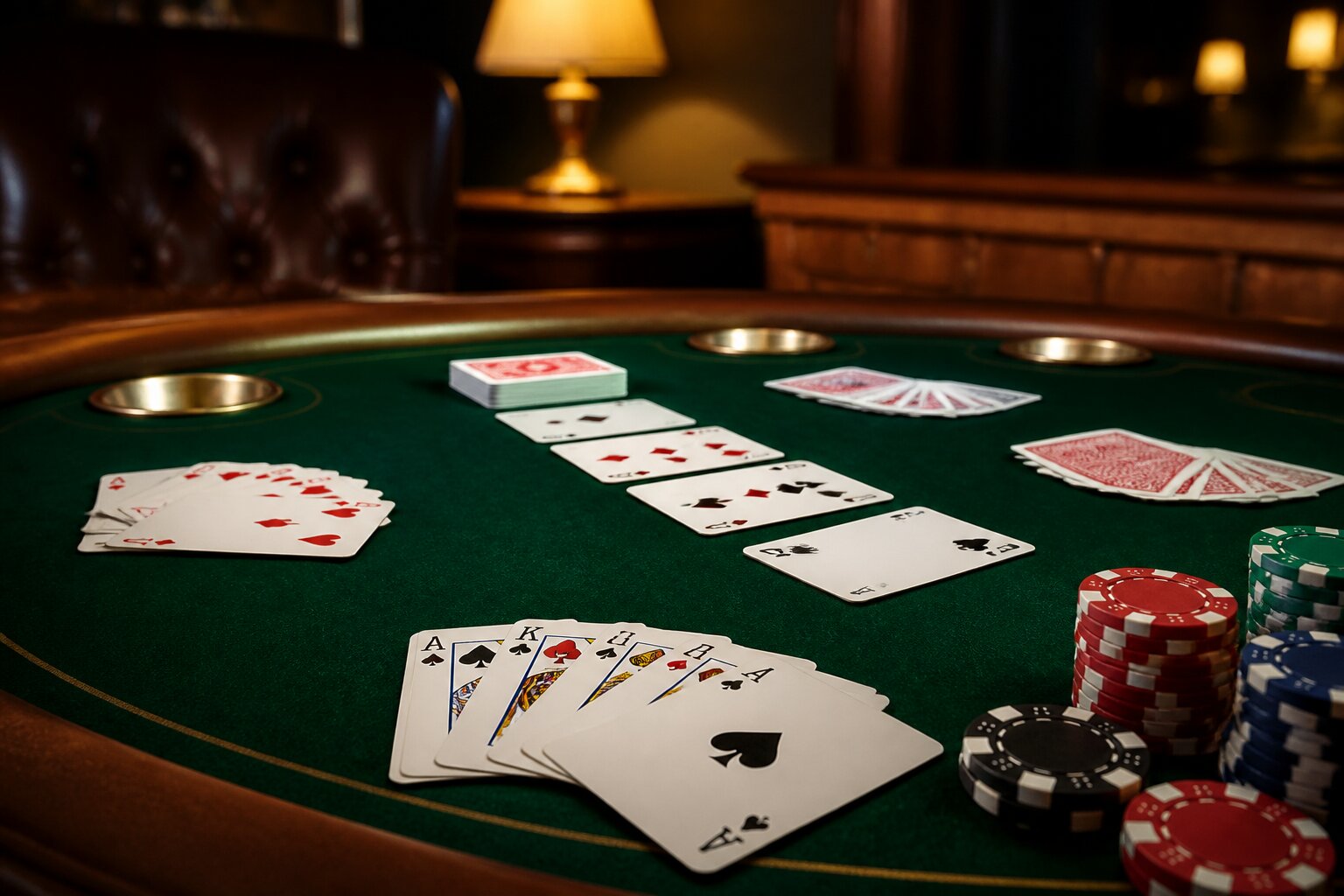
Looking to dive into the world of casino card games but not sure where to begin? You’re in the right place.
Whether you’re new to cards or just want to brush up on the basics, this guide will walk you through the most common casino card games and how they are played.
If you’ve ever wondered how each game works, what the rules are, or which card games suit your style, keep reading. We explain everything in plain English, with clear examples so you can approach the table with confidence.
What Are Casino Card Games?
Casino card games are contests played with a standard deck or multiple decks of cards where the cards are the main tool for determining outcomes. They appear in casinos in different formats and can involve a mix of decision-making, planning and elements of chance.
Some games pit the player against the dealer, while others put players against each other. Each game has its own set of rules governing how cards are dealt, how bets are placed and how winners are decided. These rules create structure: they tell you when to act, what choices you can make and how results are resolved.
Above all, card games are designed to be clear to new players once you learn the basic terms, card values and common actions used in that game. Read the rules of a game before you join a table, and the experience becomes far easier to follow.
Popular Casino Card Games & Their Rules
Casinos feature a range of card games, each with distinct play styles and goals. Below are some of the classics you will encounter and how each game generally works. These summaries cover the basics, but specific rules, side bets and payouts can vary by venue, so check the local table rules before you play.
Blackjack
Blackjack is about building a hand value close to 21 without going over. Players and the dealer receive two cards; players then choose whether to take additional cards or keep their total. Face cards count as 10 and Aces can be 1 or 11, depending on which value benefits the hand. The dealer follows a set of fixed rules for taking cards, which keeps play predictable and consistent.
Play often involves a few standard options, such as taking a hit, standing, splitting pairs or doubling down, and knowing when these are available in the variant you are playing can affect strategy. Small rule differences, such as whether the dealer hits or stands on a soft 17, will change the house edge and how you approach the game.
Poker
Poker comes in many forms, from Texas Hold’em to Three Card Poker. Generally, players receive private cards, place bets over a series of rounds and compare hands at the end. Betting strategy, reading other players and hand rankings are central. Different variants change how many cards are dealt, whether community cards are used and how betting rounds progress.
Common poker variants you might see include:
- Texas Hold’em, where players use two private cards and five community cards.
- Omaha, similar to Hold’em but with four private cards and different hand construction rules.
- Seven Card Stud, which deals cards face up and face down without community cards.
- Three Card Poker, a quicker casino-style game with simpler hand rankings and betting.
Understanding the structure of the variant you choose will help you follow betting rounds and assess risk more clearly.
Baccarat
Baccarat is straightforward to follow. Bets can be placed on the player, the banker or a tie. Each side receives two or three cards and the hand closest to a total value of 9 wins.
Card values are simple:
- Cards 2 to 9 keep their nominal value.
- 10s and face cards count as zero.
- Aces count as one.
A small commission is often charged on winning banker bets, and there are a few fixed rules that determine whether a third card is drawn for the player or banker, so it is useful to familiarise yourself with those rules at the table.
Casino Hold’em
This variation takes the rules and hand rankings of Texas Hold’em but pits the player directly against the dealer. Each player is dealt two private cards, five community cards are revealed across the round, and the best five-card combination wins. Wagering formats and side bets may differ from standard poker.
Because you play against the house rather than other players, strategy focuses more on hand strength relative to the dealer and on any qualifying rules the dealer must meet. Side bets, when offered, usually have different odds and should be treated separately to the main wager.
Pontoon
Pontoon is similar to blackjack but uses different terminology and rule tweaks. The aim remains to achieve a hand value near 21, and certain hands and plays have unique names and payouts compared with blackjack, which changes the strategy around when to stay or take another card.
Key differences to watch for include:
- Different naming for actions and hands, such as a Pontoon for a specific combination.
- Variations in when the dealer draws and how ties are resolved.
- Special payouts for particular hands that do not exist in standard blackjack.
These short descriptions give you the essentials; learning a game’s finer points will make your choices at the table clearer and more confident. Remember to check house rules and to set limits before you play.
How Are Casino Card Games Categorised?
Card games are usually grouped by how play is organised and by the role of players versus the casino.
A common division is between house-banked games and player-versus-player games. In house-banked games, such as blackjack and baccarat, the dealer represents the casino and players aim to beat that hand. In player-versus-player games, such as most poker formats, competitors try to outplay each other and win the shared stakes.
Games are also sorted by the way cards are used: draw games where players replace cards, stud games where some cards are face up and others face down, and community-card games where shared cards form part of everyone’s hand. Betting structure is another useful category, since fixed-limit, pot-limit and no-limit formats produce very different dynamics at the table.
Finally, consider how much decision-making affects outcomes. Some games offer many choices that influence results, while others are mostly resolved by the way cards are dealt. That distinction helps players pick games that match the level of thought and interaction they prefer.
Card Games Found in Land-Based vs Online Casinos
You will find most classic card games in both land-based and online settings, but the experience differs.
Land-based casinos offer in-person tables, where physical cards, a dealer and other players create a social environment. This can be helpful for learning from others and for the tactile feel of a table game.
Online casinos provide convenience and a wider range of rule variants. Digital versions let you play instantly against software, while live-dealer tables stream a real dealer to your screen so you get the human-led experience from home. Online play also frequently offers practice or demo modes to try a game without stakes.
Both environments are subject to regulatory oversight to ensure fair procedures and transparency. Tools to manage play — such as deposit limits or session reminders — are commonly available online to help players stay within their chosen boundaries.
How Are Casino Card Games Dealt & Played?
Card games follow set routines so that dealing and play are consistent and understandable.
In a live setting, a dealer shuffles the cards and deals the required number to each player, either face up or face down depending on the game. Many casinos use a shoe to hold multiple decks for games like blackjack and baccarat. Online, certified random processes or live dealers replicate the same dealing patterns so the progression of play mirrors the land-based experience.
After the deal, players make the permitted choices. In blackjack this means deciding whether to take another card or stand, while in poker players may bet, check or fold. These choices create the strategic aspect of each game and determine how pots and outcomes are resolved.
Clear rules and visible procedures help keep games fair and predictable. Understanding how a game flows makes it easier to follow decisions at the table and to recognise why certain results occur.
Myths About Casino Card Games: Facts vs Fiction
There are several persistent myths about card games that can mislead players. Addressing these helps set realistic expectations.
A popular myth claims that a sequence of losses makes a win more likely in the next round. In truth, each round is resolved according to the game’s rules and randomness; previous results do not change the mechanics that determine the next outcome.
Another misconception is that a single system can guarantee long-term success. While skill matters in games such as poker, no strategy can eliminate the built-in house edge in banked games or guarantee continual wins. Games are structured so that outcomes follow set probabilities and rules rather than predictable patterns that a player can exploit indefinitely.
Some players worry that online games are manipulated. Reputable sites use certified systems and independent testing to ensure the dealing and outcomes conform to established standards. If you want reassurance, look for independent verification or test reports from recognised auditors.
Clearing up these myths helps you approach card games with a sensible mindset and makes it easier to enjoy them for what they are.
Frequently Asked Questions About Casino Card Games
Below are answers to common questions people ask when they are learning about casino card games.
Are casino card games fair?
Yes. Licensed operators and regulated venues follow procedures and independent testing to ensure dealing and outcomes meet required standards. Transparency and oversight are central to fair play.
Do I need any special skills to play?
That depends on the game. Poker rewards strategy, reading opponents and betting skill, while other games have simpler decision points and lower strategic demands. Reading the rules before you start will show what choices the game offers.
Can I play casino card games for free?
Many online platforms provide demo versions of card games, which let you try the mechanics without risking money. These practice modes are a practical way to learn before playing with stakes.
How old do I have to be to play?
You must be at least 18 years old to participate in casino card games in the UK.
What should I do if I think I’m playing too much?
If you find play affecting other areas of your life, take a step back and use the support tools available, such as self-exclusion or deposit limits. If concerns persist, seek help from specialist organisations that provide confidential advice and support.
If you want to explore particular games in more detail or try a few demo rounds, browse our game pages to find rules, tips and variant guides tailored to each title.
**The information provided in this blog is intended for educational purposes and should not be construed as betting advice or a guarantee of success. Always gamble responsibly.