
Ever found yourself at a casino table or scrolling through an online site, wondering if blackjack and 21 are actually the same game? With both names used so freely, it’s easy to get confused. You might hear someone say they’re “playing 21” while the table label reads “blackjack”.
These card games have roots stretching back centuries, yet the names carry different connotations depending on where and how they’re played. Whether it’s a casual round at a family gathering or a formal table in a gaming room, the mechanics are familiar but the details can change.
Sorting out the history and the rules helps you know what to expect at any table. First, a quick look at where the games came from and how the names evolved will make the rest clearer.
The Origins of Blackjack and 21
The modern game traces back to 18th-century France, where it was called “Vingt-et-Un” (twenty-one). It was played in private rooms and among the upper classes, and the central aim—reach a total of 21 without going over—was established from the start.
As the game spread through Europe, local variants emerged. In Britain, a version known as Pontoon developed with its own distinct rules, but its goal remained the same. When the game crossed the Atlantic with European settlers, an American twist led to the name “blackjack”, inspired by early bonus payouts for particular card combinations. Over time, formal casino rules and home variants influenced one another, creating the range of versions players see today.
The story of these changes explains why players use different names in different settings and sets the scene for the practical differences you’ll encounter next. That background leads directly into how the two names are used in modern play.
Key Differences Between Blackjack and 21 Explained
Although the names are often interchangeable, practical differences can exist depending on the setting. Below are the main aspects where a casino-style blackjack and a casual game of 21 commonly diverge.
Decks and dealing
- Casino blackjack frequently uses multiple decks shuffled together; casual 21 normally uses a single deck and simpler dealing.
Dealer and player roles
- In a regulated blackjack game a professional dealer manages the table and follows fixed rules about when to draw. Home or pub 21 often rotates the dealer or assigns the role informally, and drawing rules can vary.
Payouts
- A casino blackjack usually pays 3:2 for an ace with a ten-value card, while most informal 21 games pay even money and don’t offer the same bonus structure.
Splitting and doubling
- Professional games have strict rules for splitting pairs and doubling bets, whereas house or group games may allow or forbid these actions on a more ad hoc basis.
Side bets and extras
- Casinos commonly offer optional side bets and insurance; casual 21 rarely includes these and keeps wagering straightforward.
Stake limits and regulation
- Casino tables and licensed online games apply set betting limits and must comply with regulatory standards; home games have no formal limits beyond what players agree.
These differences affect strategy, bet size and how a session feels at the table. Next, we’ll look more closely at how a typical round is played in each environment so you can spot those practical changes while you play.
How Are the Rules of Blackjack and 21 Played?
Both games share the same core aim—build a hand as close to 21 as possible without exceeding it—but the way a round unfolds and how bets are resolved can differ. Below are two focused descriptions showing the usual flow in casino blackjack and the simpler patterns common to home 21.
What Are the Main Rules of Blackjack?
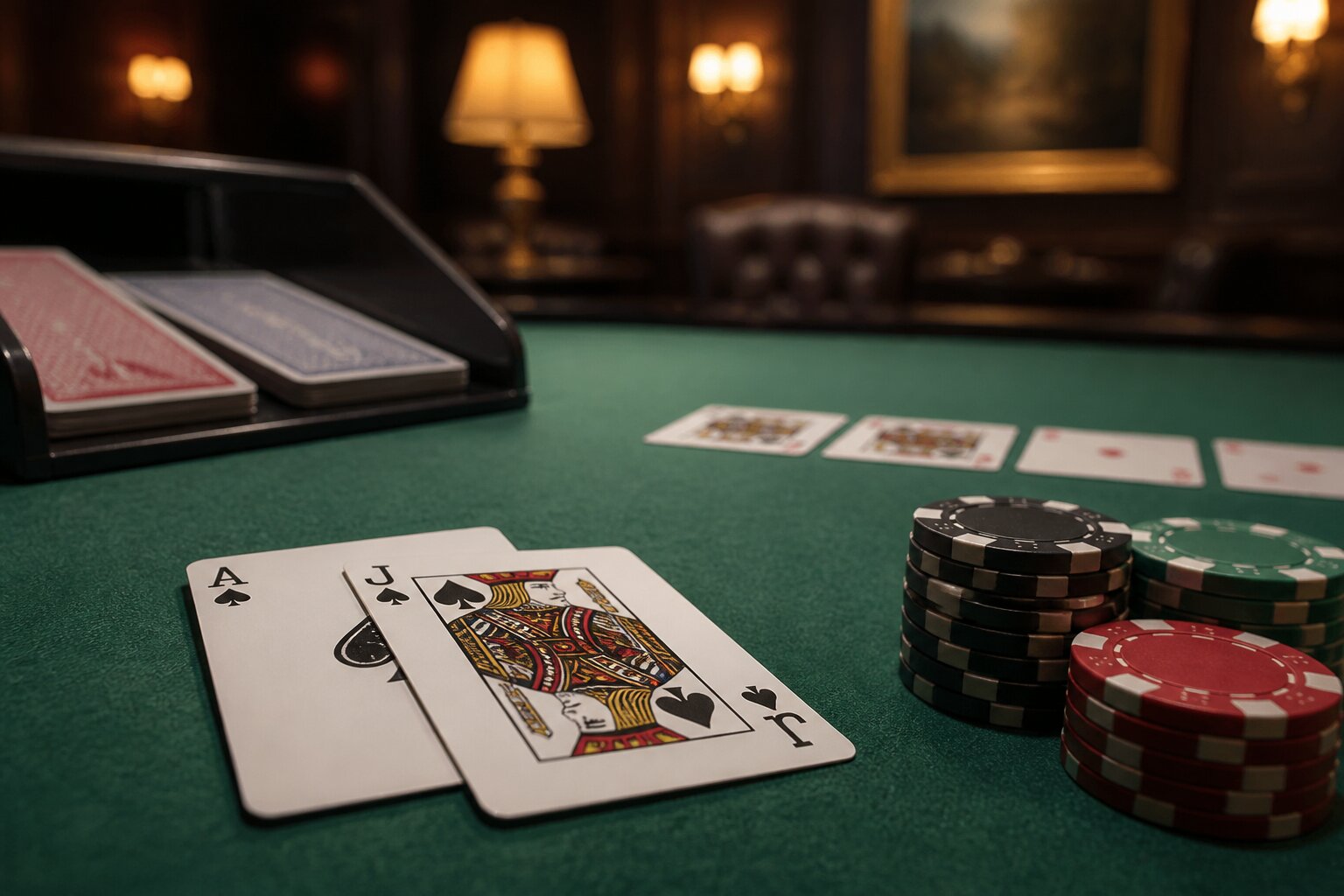
A standard casino round follows a clear structure that players and dealers both know in advance. Each participant receives two cards; players’ cards are dealt face up while one of the dealer’s is concealed. Cards 2–10 count as their pip value, face cards as 10 and aces as either 1 or 11. Players decide whether to draw more cards (“Hit”) or keep their total (“Stand”), aiming to beat the dealer’s final total without exceeding 21. A two-card total of an ace plus a ten-value card is a blackjack and usually receives the special 3:2 payout. Options such as doubling a bet for a single additional card or splitting identical cards into separate hands are permitted according to the table’s rules. After players finish, the dealer reveals the hidden card and draws to a specified total (commonly 17 or more). Tied totals return the player’s stake in a push, while busts lose instantly.
Example: Holding 8 and a Queen (18) against a dealer showing 6, a player might stand. If the dealer ultimately busts, the player wins even money.
This formal sequence makes casino blackjack easy to follow and sets the stage for how home 21 can feel different.
How Do the Rules of 21 Differ?
In a casual setting, rounds of 21 are typically more flexible. The dealer role may rotate, the number of cards dealt face up or down can vary, and there is often no special payout for an ace plus ten-value card. Players may agree local rules on whether doubling or splitting is allowed, and stakes are usually lower with informal limits. Because house rules are fluid, players benefit from confirming the specific arrangement before a round begins.
Example: In a friendly game, a £1 stake might win £1 when a player finishes on 19 against the dealer’s 18, with no other bonuses or side bets involved.
Understanding these practical differences helps you move between settings confidently. With that in mind, it’s worth considering why both names persist and how language reflects the playing context.
Why Do People Use Both Terms?
The persistence of both names—blackjack and 21—comes down to habit, setting and the expectations they carry. “21” often evokes a simple, social game played at home or in a pub, while “blackjack” signals a formal game with established payouts and house rules. Regional terms such as Pontoon continue to exist alongside these labels, each pointing to slightly different rule sets or local customs.
Casinos and digital platforms use “blackjack” to indicate the regulated variant with consistent mechanics, which helps players recognise what to expect at a table. In informal circles, “21” survives as shorthand for an easier-to-arrange game where the emphasis is on social play rather than strict procedure.
Knowing which label applies in a given setting helps you prepare: check the specific rules at the table or online game and be ready for differences in payouts or allowed actions. Next, we’ll cover where you can find each version in the UK so you know where to play according to the experience you want.
Where Can You Play Blackjack and 21 in the UK?
Formal blackjack is available at licensed brick-and-mortar casinos and regulated online sites across the UK, all of which must adhere to industry rules and regulatory standards that protect players and define table procedures. These venues display their licence information so players can verify compliance, and they enforce the legal minimum age of 18 for participation.
Traditional 21 is most often found in homes, social gatherings or small informal events. Those games are not governed by licensing unless money changes hands in a public or organised setting, so the onus is on participants to agree rules and stakes in advance.
When choosing where to play, make sure you understand the table’s rules and any regulatory protections that apply. Set clear spending boundaries before you start, and keep the experience focused on the game itself rather than the money involved.
Thank you for reading—now you should be able to tell at a glance whether the table in front of you is running a formal blackjack session or a casual game of 21, and know what to expect from the rules and payouts in each setting.
Play Online Casino Games at Money Reels
We’re delighted to welcome you to Money Reels, where our community enjoys a fun and friendly casino environment. We’d love for you to join us and explore everything we have to offer.
Getting started is straightforward: simply create an account, make a deposit and you’re all set to play. We look forward to having you with us at Money Reels.
**The information provided in this blog is intended for educational purposes and should not be construed as betting advice or a guarantee of success. Always gamble responsibly.