
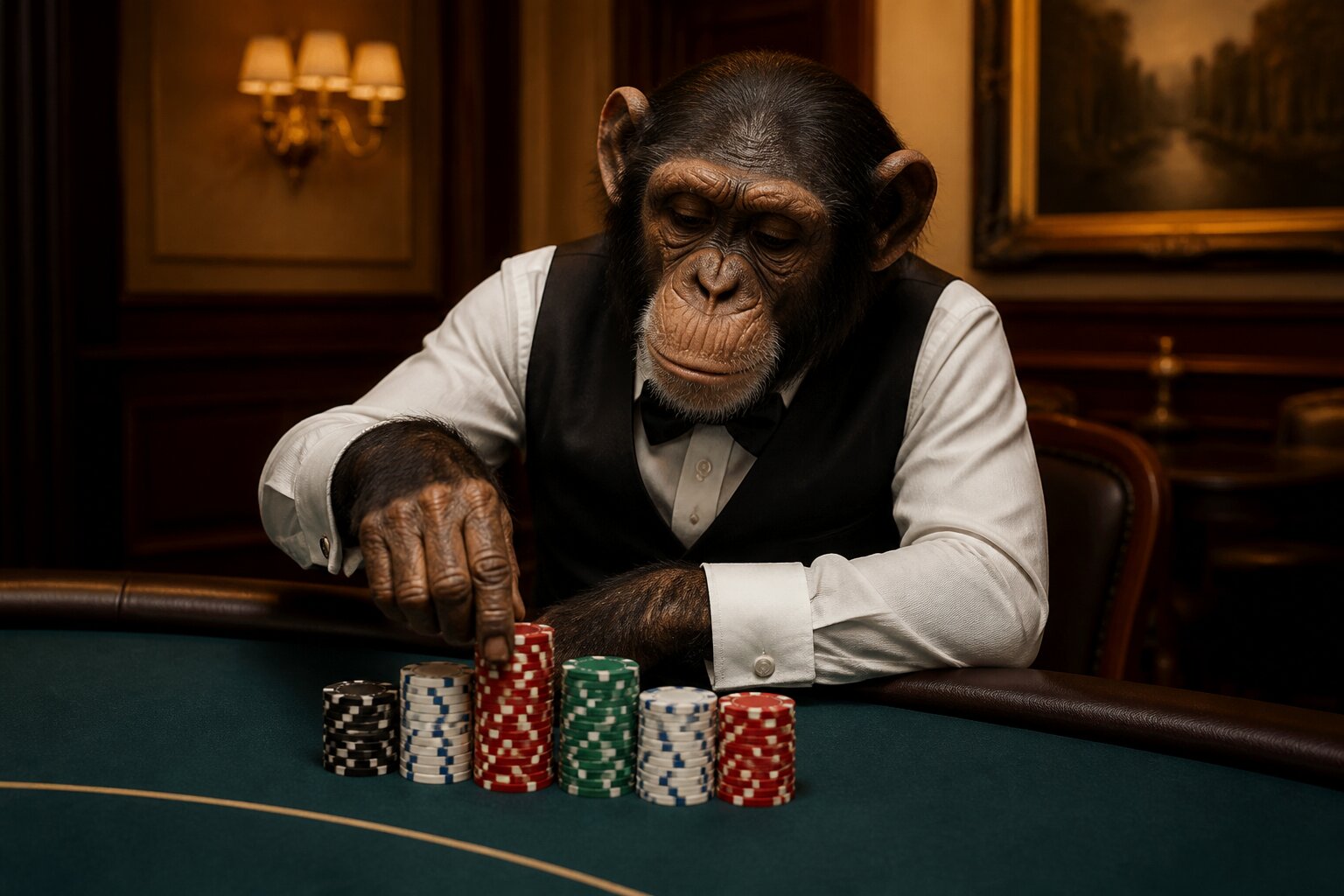
Ever sat at a blackjack table and heard someone shout "Monkey!" after the cards are dealt? You’re definitely not alone. That little shout adds colour to the game, but it can also leave newcomers puzzled.
If you want to know what players mean by "monkey", where the term comes from, and how it fits into table talk, read on. We’ll keep things clear and practical so you can follow the action and join in if you like.
What Is the Origin of "Monkey" in Blackjack?
The term "monkey" traces back to Asian gambling circles, particularly in places where English and local languages mixed around casino tables. The word became a casual nickname for any card valued at ten: the Ten, Jack, Queen, or King. That grouping makes sense in play because those cards all share the same numeric value.
Over time the expression migrated beyond its original regions and turned up in casinos and card rooms globally. It stuck largely because table talk spreads quickly among regulars and visitors. There isn’t a single documented first use, but reports from players and casino staff point to the phrase becoming familiar from the early 2000s onwards.
This history explains why the word feels traditional rather than formal: it’s a piece of player language rather than part of the official rules.
How Do Players Use the Term "Monkey" at the Table?
At the table, "monkey" is typically called out when a player wants or expects a card worth ten. You’ll hear it in moments of anticipation, such as when someone with 11 asks for one more card or when the dealer reaches for the shoe. It’s a lively bit of banter that signals what value the player hopes to see without changing how the game is played.
Players often react together, and the dealer may smile, but the shout doesn’t alter the dealing or the mechanics of the round. In short, it’s social language used to express the situation at hand and to engage with others at the table.
If you join in, do so in a way that keeps the pace of play smooth and respects other players’ comfort.
Common Slang Terms in Blackjack Explained
Knowing a few common phrases helps you follow the table and join in naturally. These terms are widely used and describe common situations in play.
Snapper
Used when a player gets a blackjack, which is an Ace paired with a Ten or face card. The word captures the excitement of that immediate, strong result. In some places you might also hear the hand simply called a blackjack or natural.
Stiff
Refers to a hand between 12 and 16. It is a precarious total because hitting risks exceeding 21 while standing might leave you behind a dealer’s stronger hand. Players often treat a stiff with extra caution and base their choice on the dealer’s upcard.
Face
Short for face card: Jack, Queen, or King. These count ten points each. Because they are all worth the same, face cards often help create strong hands or contribute to a blackjack.
Upcard
The dealer’s visible card. Players use it to assess likely outcomes and temper their decisions. The upcard is central to basic strategy and to read the probable strength of the dealer’s hand.
Bust
When a hand exceeds 21 and is therefore a loss for that round. Going bust ends your involvement in that hand, so players try to balance risk and reward to avoid it.
Double Down
Double down is a decision to increase your wager after the first two cards in exchange for one extra card. It is a high-risk, high-reward choice in certain situations and may not be allowed at every table or on every hand. Players typically double down when the odds suggest a single extra card will put them in a strong position.
These expressions describe common positions and options in the game, and they help players communicate quickly during play. Remember to play responsibly and be aware of the rules and limits at the table.
Does "Monkey" Refer to a Specific Card or Outcome?
"Monkey" is not a single card but a category: any card valued at ten. That includes:
- Ten
- Jack
- Queen
- King
Suits do not matter for a "monkey" — the term refers only to the card's value, not its suit. Players use the word to indicate the type of card they would like to receive in that moment, rather than to predict or control the result.
Saying "monkey" is part of table talk and has no effect on dealing or the outcome of the hand. Dealers and the game procedures are unaffected by such remarks, so play remains impartial and governed by the rules and random chance.
Why Do Some Players Shout "Monkey" During a Game?
People call out "monkey" because it’s an easy, familiar way to express that they want a ten-value card. It’s part tradition, part excitement, and part social interaction. The shout can lift the atmosphere and create a sense of shared anticipation among players.
At the same time, it’s important to be mindful of those around you: some players enjoy the banter, others prefer a quieter table. A friendly call that keeps the game flowing is generally welcomed.
If you’re unsure whether to join in, observe the table for a round or two and match the energy appropriately.
Is "Monkey" Slang Unique to Blackjack or Used in Other Casino Games?
While the term is most closely associated with blackjack, you will sometimes hear it used in other card games where ten-value cards matter, such as baccarat. Because tens and face cards frequently influence outcomes in those games, the same bit of slang can crop up among players who like colourful language at the table.
That said, the primary connection remains with blackjack because tens so often become decisive there. In blackjack a ten-value card can change the result of a hand in an instant, so shorthand terms for those cards have stuck with players and dealers over time.
You do not need to learn this slang to play or enjoy any casino game. It is simply one of several pieces of player language that add personality to play tables and to conversations among regulars. Knowing the term will not affect the mathematics or outcome of the games, and it is fine to listen, learn, or politely ignore it as you prefer. Play responsibly and within your limits.
Misconceptions About "Monkey" in Blackjack
There are a few common misunderstandings to clear up. The first is that using the term does not change the cards or outcomes; it is purely social. Saying the word does not affect the shuffle, the deal, or the mathematical odds of the hand, and it should not be treated as influencing play.
Many players also misunderstand which cards are meant: some believe "monkey" refers only to face cards, but tens are included as well. In practical terms, any card with a value of 10 counts the same in blackjack, so this usage groups together jacks, queens, kings and tens.
Finally, shouting such words is not a strategy or skill — it is table banter. Vocalising terms can add to the atmosphere, but it is separate from decision making, bankroll management and the rules that determine results.
Knowing these points helps you separate the social culture of the table from the mechanics of the game itself. Once you understand the meaning and limits of the term, it is easier to enjoy the atmosphere without confusing it with technique or treating it as a tactic.
Should You Use Slang Like "Monkey" in UK Casinos?
Thinking about joining the chatter? There are a couple of practical points to bear in mind.
Table Etiquette Matters
Enjoying a bit of banter is fine if it doesn’t interrupt play or make others uncomfortable. Some players welcome the friendly noise, while others prefer silence to concentrate. Match the table’s tone and keep calls brief so everyone can follow the game.
Responsible Play Comes First
Keep your focus on how you want to play and on staying within your limits. Language at the table should never distract from careful, controlled play or from respecting other players’ choices.
**The information provided in this blog is intended for educational purposes and should not be construed as betting advice or a guarantee of success. Always gamble responsibly.